Knee Pain Relief Without Surgery: Your Non-Surgical Options

Meta description: Looking for knee pain relief without surgery in Knoxville, TN? Learn how personalized care, rehab, shockwave therapy, and movement assessment may help.
URL slug: /knee-pain-relief-without-surgery/
If you’ve been told that surgery or injections may be your next step, it’s understandable to want another perspective. Knee pain relief without surgery may be possible for some people, depending on the cause, severity, activity level, and overall health of the joint.
That doesn’t mean surgery is never needed. It means you deserve a clear assessment and a structured plan before making a major decision. At Dr. Arthur Poisal Chiropractic, we take time to listen, understand how your knee is affecting daily life, and look at the way your hips, ankles, spine, and movement patterns may be contributing.
Our goal is to help you make an informed choice with your medical team, not against them.
When Surgery May Truly Be Necessary
Some knee problems need an orthopedic evaluation and may require surgical care. Examples can include:
- A fracture involving the knee joint
- A complete ligament tear causing major instability
- Certain meniscus or cartilage injuries
- Advanced joint damage
- Severe deformity
- Repeated locking or giving way
- Pain that continues to limit your life despite a well-planned conservative program
You should also seek prompt medical attention for a knee that becomes suddenly very swollen, red, hot, or difficult to move, especially if you have a fever. An acute injury with an obvious deformity or an inability to put weight on the leg also deserves immediate evaluation.
A conservative approach should never delay care when there is a serious structural problem. Instead, it can help you understand what is happening and determine whether your symptoms may respond to a non-surgical plan.
The Mayo Clinic knee pain guide is also a helpful general resource for understanding when evaluation may be appropriate.
Start With a Thorough Assessment
Knee pain doesn’t always begin in the knee.
Your hip controls how your thigh moves. Your ankle and foot affect how your lower leg absorbs force. Your spine and pelvis influence how you walk, squat, climb stairs, or run. If one area is stiff or weak, another area may take on extra stress.
That’s why a useful assessment may include:
- Your knee’s range of motion
- Strength in the quadriceps, hamstrings, glutes, and calves
- Hip control during a squat or step-down
- Ankle mobility
- Walking and running mechanics
- Balance and coordination
- The location, timing, and behavior of your pain
- Previous injuries, treatments, and imaging
At our clinic, we don’t want to rush you through a standard routine. We take time to hear what you’re experiencing before creating a customized treatment plan. That plan may change as your strength, comfort, and function improve.

Knee Pain Relief Without Surgery: What Conservative Care Can Do
Conservative care cannot rebuild every damaged structure or guarantee that surgery will never be needed. It can, however, address several factors that may be making your symptoms worse.
A thoughtful plan may help you:
- Improve strength around the knee
- Reduce unnecessary stress during movement
- Restore mobility in the hip, ankle, or spine
- Improve balance and control
- Return to walking, exercise, or daily activities more comfortably
- Build confidence in the affected leg
- Understand which activities help and which ones need modification
The aim is not simply to make the knee feel better for a few days. We work toward practical, lasting progress that helps you return to the activities you value, whether that means running, lifting weights, playing with your grandchildren, or walking comfortably through your neighborhood.
Hands-On Joint Work and Adjustments
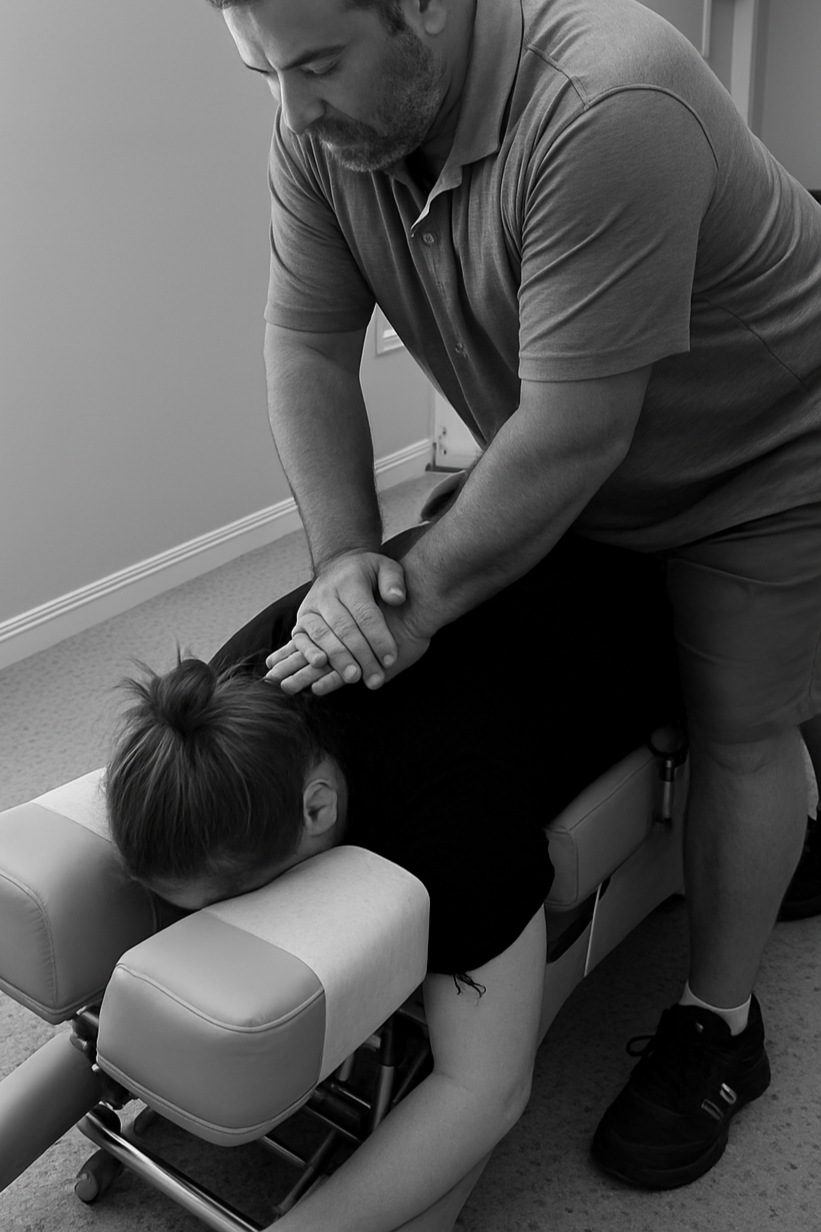
Hands-on care may be useful when certain joints or soft tissues are not moving well. Depending on your assessment, treatment may include gentle work around the knee, hip, ankle, pelvis, or spine.
The purpose is to support movement, not to force a joint into a position or treat every knee problem the same way. Hands-on care is often most helpful when it is combined with strengthening and movement retraining.
Spinal adjustments may also be considered when restricted spinal or pelvic motion is affecting how you load the leg. Your treatment should always be adapted to your comfort, health history, and specific findings.
Learn more about our approach on the Dr. Arthur Poisal Chiropractic about page.
Shockwave Therapy for Stubborn Soft-Tissue Pain
Shockwave therapy uses acoustic waves directed at a specific area. It may be considered when pain involves stubborn tendon or soft-tissue problems, such as irritation around the patellar tendon.
It is not a replacement for an assessment or a strengthening program. It also isn’t the right choice for every type of knee pain. But for selected tendon and soft-tissue concerns, it may be one part of a broader plan.
You can learn more through our shockwave therapy overview.

Rehabilitative Exercises to Rebuild Control
Exercise is often the foundation of long-term improvement. The right exercises can help your body handle everyday loads with less strain.
Your program may include:
- Quadriceps strengthening
- Hamstring and calf work
- Glute and hip strengthening
- Controlled step-ups
- Gentle squats within your current ability
- Balance exercises
- Range-of-motion work
- Core and pelvic control
- Gradual return-to-running or sport-specific drills
The exercises should match your current symptoms. If a movement causes sharp pain, significant swelling, or a noticeable worsening that lasts into the next day, it may need to be adjusted.
Progress is usually gradual. The goal is not to test how much discomfort you can tolerate. It is to build capacity in a way your body can manage and repeat consistently.
Look Beyond the Knee
A knee may hurt because it is carrying more force than it can comfortably handle. Limited ankle mobility, a weak hip, poor foot control, or an altered walking pattern can all influence the way force travels through the leg.
For example, if the ankle does not bend well, you may compensate by turning the foot out or allowing the knee to move differently. If the hip is not controlling the thigh, the knee may drift inward during stairs, squats, or running.
Addressing these connected areas can make your plan more effective. It may also help you understand why symptoms return when you stop treatment or exercise.
Why Earlier Attention Often Helps
Many people wait until knee pain affects nearly every part of the day. They change how they climb stairs, avoid exercise, stop taking walks, or rely on the other leg. Over time, reduced activity can lead to weakness, stiffness, and less confidence.
Earlier attention gives you more options. It may allow you to work on strength and movement before compensation becomes deeply established.
This does not mean every ache requires immediate treatment. It does mean recurring pain, swelling, instability, or a steady decline in activity deserves attention. A timely assessment can help you decide whether rest, activity changes, rehabilitation, hands-on care, or a referral is the appropriate next step.
How Long Should You Try Conservative Care?
There is no single timeline for every knee problem. A mild movement-related issue may begin improving within a few visits. A long-standing condition or more significant injury may take several months.
A practical plan often includes these checkpoints:
- First visit: Identify likely contributors, discuss your goals, and determine whether referral or additional evaluation is needed.
- Four to six weeks: Review pain, walking tolerance, range of motion, strength, and daily function.
- Eight to twelve weeks: Look for meaningful changes from consistent exercise and care.
- Three to six months: Decide whether the plan is producing enough progress or needs to be changed.
- Beyond that: If pain and disability remain substantial despite consistent, appropriate care, discuss additional options with your physician or orthopedic specialist.
The key is not simply how many weeks have passed. It is whether the plan was appropriate, whether it was followed consistently, and whether your function is improving.
If there is no change at all, the answer may not be “try harder.” Your diagnosis, exercise technique, treatment approach, or need for imaging may need to be reconsidered.
Make the Decision With Your Doctor
You do not have to choose between blindly accepting surgery and ignoring your knee. Ask questions and invite your doctor into the conversation.
You might ask:
- What is the specific reason surgery is being recommended?
- What would happen if I tried structured conservative care first?
- Is there a time-sensitive concern that makes waiting unsafe?
- What changes would show that the plan is working?
- When should we repeat imaging or reassess?
- What activities are safe for me right now?
- Which options have the strongest evidence for my diagnosis?
A second opinion may also be reasonable, particularly if you feel unsure about the recommendation. The purpose is not to avoid necessary care. It is to make a decision based on your symptoms, examination, imaging, goals, and health history.

A Personalized Next Step in Knoxville
At Dr. Arthur Poisal Chiropractic, we care for patients of all ages, from active adults hoping to return to training to older adults who simply want to walk and move with more confidence.
If you’re in Knoxville TN, including the Whittle Springs and North Knoxville area, we’ll be happy to listen to what has been happening and help you understand your options. We’ll perform a thorough assessment and explain whether a customized plan may be appropriate, or whether another type of medical evaluation should come first.
You can call us at (865) 687-5700 or fill out our contact form and ask for a call back. Let’s take the next step together, at a pace that feels clear and manageable.