Knee Pain When Walking: Why It Hurts and What Helps

SEO title: Knee Pain When Walking: Why It Hurts and What Helps
URL slug: /blog/knee-pain-when-walking-knoxville-tn
Meta description: Knee pain when walking in Knoxville can have several causes. Learn what may help, when to keep moving, and when a gait assessment is the right next step.
If your knee hurts every time you take a step, even a short walk to the mailbox can feel like a challenge. Knee pain when walking may make you slow down, avoid stairs, or change the way you move without realizing it.
The good news is that walking pain is not something you have to simply accept. The first step is understanding what may be placing stress on the knee and which parts of your movement could be contributing.
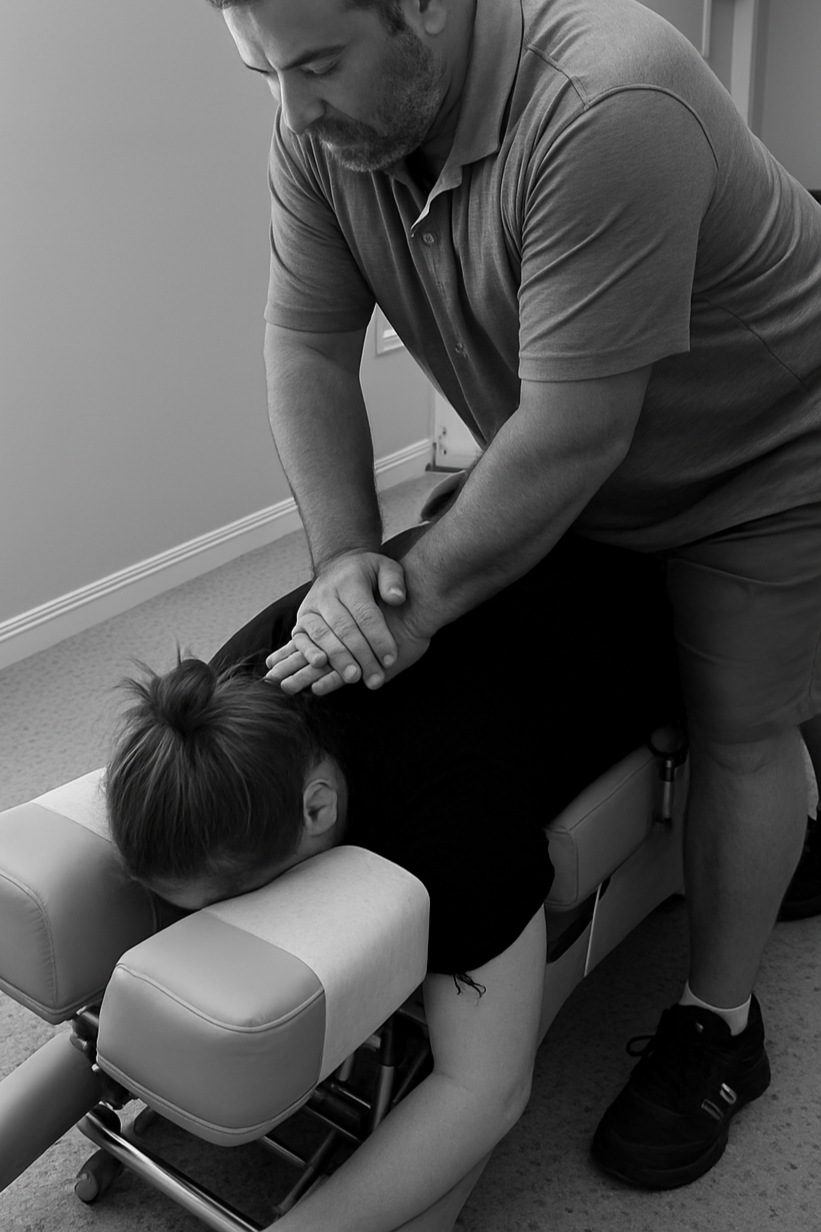
At Dr. Arthur Poisal Chiropractic, we take time to listen to your concerns and perform a thorough assessment before recommending a customized plan. Our goal is to help you walk more comfortably and return to the activities that matter to you.
Why does knee pain when walking happen?
Walking places a repeated load through your foot, ankle, knee, hip, and lower back. With every step, your leg absorbs force, controls your body weight, and helps you move forward.
Pain may appear when one part of that system is irritated or is working harder than it should. Common contributors include:
- Joint irritation or age-related changes
- A recent increase in walking, exercise, or standing
- Hip or thigh weakness
- Reduced ankle mobility
- A previous knee injury
- Changes in foot position or footwear
- Difficulty controlling the knee as you land each step
- Referred discomfort from the hip or lower back
Your walking pattern matters, too. A short stride, a stiff leg, turning your foot outward, or placing more weight on one side can change how force travels through the knee.
This does not mean that your walking style is “wrong.” It means your body may be adapting to discomfort, limited mobility, or a lack of strength. A movement assessment can help identify which areas deserve attention.

How your walking pattern can create new pain
When your knee hurts, you may naturally protect it. You might take shorter steps, lean away from the painful side, or spend less time standing on that leg.
That response can be helpful for a short time. However, if it continues, your body may begin placing extra stress on another area. You could notice:
- Hip soreness from shifting your weight
- An ankle that feels overworked
- Tightness through the lower back
- Pain on the opposite side
- More fatigue during an ordinary walk
This is one reason knee pain when walking deserves a complete look at how your whole body moves. Focusing only on the painful spot may miss a contributing problem above or below the knee.
For example, limited hip control may affect how your knee moves during each step. Reduced ankle motion may change how you land. A sensitive lower back may also alter your stride. These relationships do not prove one specific diagnosis, but they show why a personalized assessment is valuable.
Should you keep walking?
In many cases, gentle movement can be useful. But you should not force yourself through sharp, worsening, or unstable pain.
A short walk may be reasonable when:
- Your pain stays mild and manageable
- You can walk without limping
- Your knee does not buckle or lock
- Symptoms do not continue getting worse afterward
- You can keep a relaxed, natural stride
Stop or reduce the walk if your pain increases with every step, your gait changes noticeably, or your knee feels unstable. Avoid using pain as a test of toughness. Pushing through may make it harder to tell what is actually irritating the area.
If you are unsure, try reducing the distance and pace rather than stopping all movement. A few comfortable five-minute walks may be better than one long walk that leaves you sore for the rest of the day.
Make a walk less painful today
Small changes may reduce stress while you figure out the cause of your symptoms.
Slow your pace
A fast pace usually increases the demand on your legs. Walk slowly enough that you can keep your steps even and controlled. Try not to rush through the painful part of each stride.
Choose a level surface
Hills, uneven sidewalks, and loose ground can require more control from the knee and hip. For now, choose a smooth, level route. A quiet neighborhood sidewalk around Whittle Springs or North Knoxville may be more comfortable than a steep or uneven trail.
Wear supportive shoes
Your shoes do not need to be expensive, but they should feel stable and comfortable. Avoid walking in worn-out soles or footwear that makes you feel unsteady. If a new pair changes your symptoms, make a note of it.
Take shorter walks more often
Instead of one long walk, divide your activity into several shorter sessions. This lets you keep moving without repeatedly overloading an irritated area.
Pay attention to what happens afterward
Symptoms that feel fine during a walk but become much worse later may be a sign that the total load was too high. Track the route, duration, surface, shoes, and how your knee feels that evening and the next morning.

Stiffness after sitting is not the same as pain with each step
People often describe knee symptoms as “stiffness,” but that word can mean different things.
Stiffness after sitting may feel like your knee needs a few moments to loosen up. It may improve after several gentle steps or light movement. Some people notice it after driving, watching television, or getting out of bed.
Pain with every step is different. It may feel sharper, more localized, or more closely linked to putting weight through the leg. It may also cause you to limp or avoid fully bending and straightening the knee.
The difference does not identify the cause by itself. Still, it gives us useful information. When you describe exactly when symptoms begin, what makes them better, and how long they last afterward, we can make the assessment more specific.
What a gait assessment can tell you
A gait and movement assessment looks beyond where you feel pain. We may observe how you:
- Place your foot and transfer weight
- Bend and straighten the knee
- Control your pelvis and hip
- Move through the ankle
- Step up, sit down, or change direction
- Compensate for discomfort
We also listen to your history. Did the symptoms begin after a fall, a new exercise routine, or more time on your feet? Does the pain occur only outside, or also around the house? Does your knee feel weak, swollen, or stuck?
These details help us understand which structure may be irritated and whether another area is contributing. In some cases, care may include gentle adjustments to support overall mobility, rehabilitative exercises to improve strength and control, or other appropriate therapies.
When clinically appropriate, shockwave therapy may be discussed for certain stubborn soft-tissue concerns. Decompression therapy may also be considered when symptoms involve contributing areas of the spine. The right plan depends on your assessment, not a one-size-fits-all protocol.

When to have knee pain checked
Please arrange an assessment if symptoms keep returning, limit your normal activities, or are not improving with reasonable activity changes.
Seek prompt medical care if you have:
- Sudden or significant swelling
- A knee that repeatedly gives way
- A knee that locks or cannot move normally
- Inability to put weight on the leg
- A major injury, fall, or twisting event
- Redness, warmth, or fever with knee pain
- Pain that wakes you at night
These symptoms may require evaluation by a medical provider or urgent care. A chiropractic assessment may be appropriate for some movement-related concerns, but serious or sudden symptoms should not be ignored.
Take the next step toward easier walking
You should not have to plan your day around whether your knee will tolerate a short walk. With a thorough assessment, we can look at your symptoms, walking pattern, mobility, and strength together.
At Dr. Arthur Poisal Chiropractic, we care for patients of all ages. We take time to understand what you are experiencing before creating a customized treatment plan. Our focus is on practical progress and lasting results that help you walk comfortably and get back to the things you enjoy.
If you’re in Knoxville, TN, including Whittle Springs and North Knoxville, we’ll be happy to help you decide on a simple next step. Call (865) 687-5700 or fill out our contact form for a call back. There’s no pressure, just a chance to talk through what’s going on and see how we can help.