Chiropractor for Athletes in Knoxville, TN: Built Around Your Training

SEO title: Chiropractor for athletes Knoxville TN | Knox Chiro
Meta description: Looking for a chiropractor for athletes Knoxville TN? Get a personalized movement assessment and training-aware care that helps you stay active. Call today.
URL slug: /chiropractor-for-athletes-knoxville-tn
If you’re searching for a chiropractor for athletes Knoxville TN, you probably don’t want a generic treatment plan. You want someone who understands your training, your goals, and the difference between normal post-workout soreness and a problem that keeps getting worse.
Maybe you’re a runner dealing with a stubborn hip or back issue. Maybe your shoulder bothers you every time you press overhead. Maybe you’re a CrossFit athlete, golfer, weightlifter, or high school athlete trying to stay active while an old injury keeps resurfacing.
At Dr. Arthur Poisal Chiropractic, we take time to listen before recommending care. We look at how you move, what you’re training for, and what may be contributing to your symptoms. Then we create a plan around you, not around a one-size-fits-all routine.

Training Load Can Add Up
Athletes often don’t get injured because of one bad rep, one run, or one swing. Problems can build slowly when your body is asked to handle more stress than it can recover from.
A training week may include:
- Long runs or speed work
- Heavy squats, deadlifts, or Olympic lifts
- Repeated jumping, sprinting, or throwing
- Long hours sitting at school or work
- Limited sleep or recovery time
- An old injury that never fully regained strength or mobility
When these factors stack up, your body may start compensating. You may shift your weight during a squat, rotate differently during a golf swing, or shorten your stride while running.
At first, the change may seem minor. Over time, it can place extra stress on another area. A restricted ankle may affect your knee. Limited hip movement may affect your low back. Stiffness through the mid-back may change how your shoulder moves.
The painful area isn’t always the only area that needs attention.
Why a Standard Adjustment May Not Be Enough
A chiropractic adjustment may be helpful, but athletes often need more than a quick treatment without context.
Your care should account for:
- Your sport or activity
- Your current training phase
- Your injury history
- Your work and school demands
- Your strength and mobility
- Your upcoming competition schedule
- How your symptoms respond to movement
A runner preparing for a half marathon has different needs from a powerlifter preparing for a meet. A high school athlete still growing has different needs from an aging golfer who wants to stay on the course comfortably.
That’s why our approach starts with a thorough assessment. We want to understand what you’re experiencing and how it affects your performance before we decide what care makes sense.
How a Chiropractor for Athletes Knoxville TN Approach Starts With Movement
When you visit our Knoxville office, we’ll ask questions about more than where you hurt.
We may want to know:
- When your symptoms started
- Which movements make them better or worse
- Whether your symptoms change during training
- How your body feels the next morning
- What previous care you’ve tried
- What your normal training week looks like
- What you want to return to doing
We may also observe movement patterns such as walking, squatting, reaching, rotating, or bending. The goal isn’t to judge your form or tell you to stop everything you enjoy. It’s to identify restrictions, compensations, and areas that may need better support.
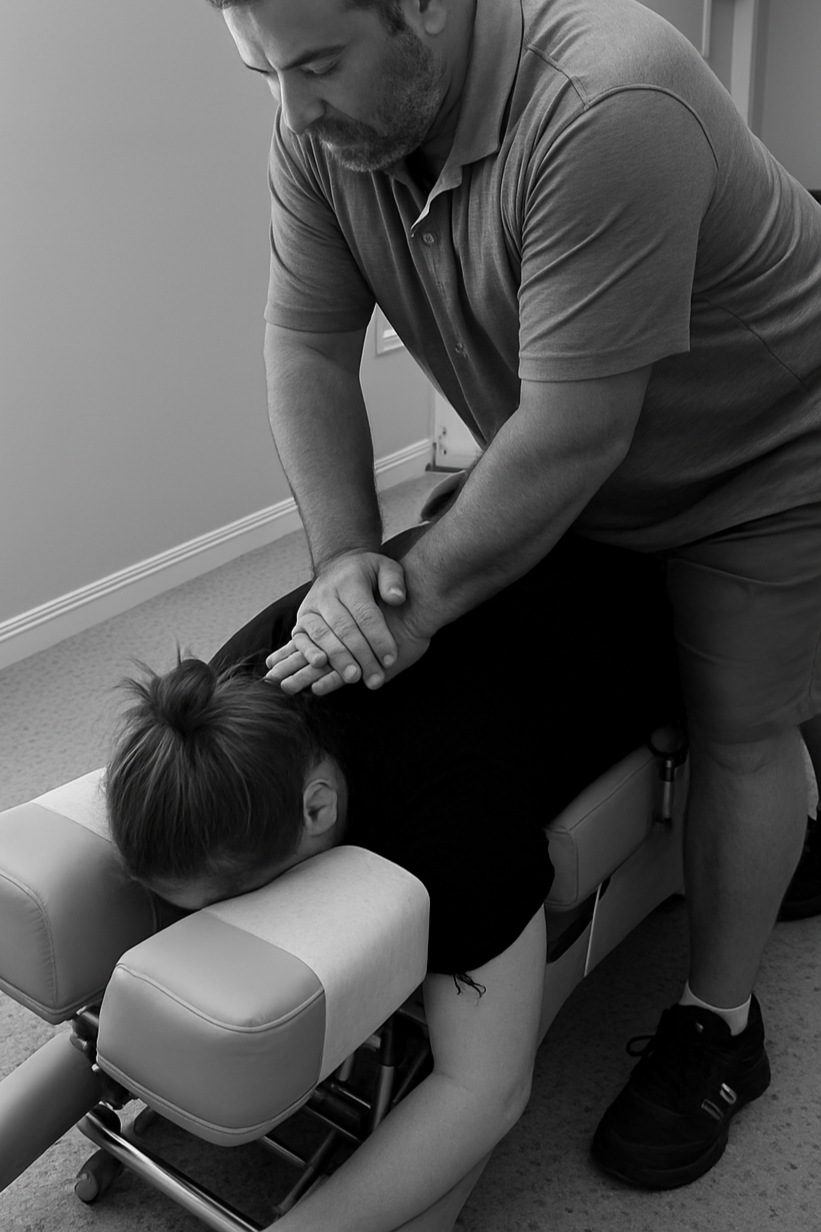
This information helps us build a customized treatment plan. Your plan may include hands-on care, mobility work, decompression therapy, shockwave therapy, rehabilitative exercises, or a combination of approaches based on your needs.
Learn more about our personalized approach to care.
Time Care Around Training and Competition
The timing of care matters when you train hard.
Some athletes need help managing symptoms during a demanding training block. Others need to prepare for a competition, recover afterward, or rebuild movement after taking time off.
We can discuss how to schedule care around your routine. Depending on your situation, that may mean:
- Addressing mobility limitations during the off-season
- Using lighter training while an irritated area settles
- Planning care several days before an event
- Focusing on recovery after competition
- Adding exercises that support your next training phase
- Gradually increasing activity instead of returning all at once
We won’t assume that every athlete should follow the same schedule. Your response to care, your sport, and your goals all matter.
Decompression and Shockwave Therapy for Stubborn Problems
Some training-related problems continue even after you reduce activity. When appropriate, additional therapies may be included in your care plan.
Decompression therapy
Decompression therapy may be considered when symptoms are connected with spinal compression, irritation, or difficulty tolerating certain positions. It is not the right choice for everyone, so we first look at your history and examination findings.
The goal is to create a more comfortable environment for movement while we address the factors contributing to the problem.
Shockwave therapy
Shockwave therapy uses focused acoustic waves to target specific areas of stubborn soft-tissue discomfort. It may be considered for certain tendon or muscle-related concerns that have not responded well to rest alone.
We’ll explain what the therapy is intended to do, what you may feel during treatment, and how it fits with the rest of your plan. You can also watch our Shockwave Therapy: The Basics Explained video for an overview.
These therapies are not replacements for a complete plan. They work best when combined with appropriate movement, recovery, and gradual loading.

Rehabilitative Exercises Help Keep Progress in Place
Hands-on treatment can help you move more comfortably, but your daily movement habits matter too.
Rehabilitative exercises may help you build:
- Strength around an irritated area
- Control during sport-specific movements
- Balance and coordination
- Joint mobility
- Confidence returning to activity
- Tolerance for gradually increasing training loads
Exercises should match your current ability. If an exercise causes sharp pain, changes your form, or leaves you noticeably worse afterward, it may need to be modified.
For a runner, that could mean building hip and lower-leg control before adding more mileage. For a lifter, it could mean improving bracing and movement control before returning to heavier loads. For a golfer, it could mean working on rotation and balance without forcing a painful range.
The purpose is not to give you a long list of exercises to complete perfectly. It’s to give you practical tools that support the activities you want to return to.
Should You Train Through Pain or Back Off?
This is one of the most common questions athletes ask.
Mild stiffness or muscle fatigue may not always require complete rest. You may be able to adjust your training by reducing weight, lowering volume, changing the range of motion, or choosing a different activity for a few days.
Backing off is usually wise when:
- Your pain increases with each set or repetition
- You have to change your form to complete the movement
- Symptoms last longer or feel worse after training
- You notice new numbness, tingling, or weakness
- Your performance is declining because of pain
- You’re avoiding normal daily activities
Stop the activity and seek prompt medical evaluation for severe or sudden symptoms, significant weakness, loss of bladder or bowel control, or pain following a serious injury.
You don’t have to choose between ignoring the problem and stopping all activity indefinitely. A thoughtful assessment can help you decide what to modify and how to progress safely.
Care for Young Athletes and Active Adults
We care for patients of all ages, including young athletes. Growing bodies, changing training demands, school schedules, and sports specialization can all affect how an athlete moves and recovers.
Parents often want to know whether their child’s pain is something to monitor, modify, or have evaluated. We’ll listen to both the athlete and the parent, explain what we find, and recommend the next step clearly.
We also work with adults who want to keep running, lifting, golfing, hiking, or simply moving comfortably. Your goal may not be a podium finish. It may be picking up your grandchild, walking around the neighborhood, or getting through a workout without worrying about the next flare-up.
Your plan should fit your life.

A Practical Starting Point in Knoxville
If you live near Whittle Springs or elsewhere in Knoxville, you don’t have to wait until an injury completely disrupts your training before asking for help.
At Dr. Arthur Poisal Chiropractic, we’ll take time to understand what’s going on, assess how you move, and discuss realistic options. Our focus is on helping you feel better, move better, and work toward lasting results that support the activities you value.
If you’re looking for a chiropractor for athletes Knoxville TN, we’ll be happy to talk through your goals and concerns. Call (865) 687-5700 or fill out our contact form and ask for a call back. We’ll help you take the next step without pressure.
Frequently Asked Questions
Can I still train while receiving chiropractic care?
Often, training can be modified rather than stopped completely. The right approach depends on your symptoms, movement patterns, and how your body responds. We’ll help you understand what to reduce, what to continue, and when to progress.
Do I need to be injured to visit?
No. Some athletes schedule an assessment when they notice recurring stiffness, reduced mobility, or changes in performance. Early attention may help you address a developing issue before it affects more of your training.
Do you work with high school athletes?
Yes. We care for patients of all ages, including young athletes. We’ll consider their sport, training schedule, stage of development, and symptoms when discussing care.
How do I get started?
Call (865) 687-5700 or complete the online contact form. Share what you’re experiencing and what you want to get back to doing. We’ll be happy to call you back and discuss the next step.