For people who want to keep moving
Sports Chiropractic & Injury Rehab
Recover with a plan that respects both your injury and the activity you love.
Athletes and active adults do not only want pain to stop. They want to know when they can run, lift, play, hike, or train again. We help you understand the problem, make a sensible return plan, and build capacity for the demands ahead.
Who this helps
Care for the life you’re trying to get back to.
Runners, lifters, cyclists, hikers, recreational athletes, and weekend competitors can all benefit from care built around their actual activity.
It is useful after an injury that has changed your stride, swing, landing, or confidence, even when the initial pain has started to fade.
People with recurring overuse pain may need to look at training load, recovery, strength, and movement rather than simply resting until the next session.
Active older adults can use the same approach to keep gardening, golf, walking, and strength work enjoyable and sustainable.
How it works
A clearer plan, explained in plain language.
Understand the demand
We learn what your sport or activity asks of your body and what changed before symptoms appeared.
Calm and rebuild
Hands-on care, mobility, and graded exercise help you move from protection toward useful strength.
Return with markers
We use real tasks and clear checkpoints so “better” means ready for the next level, not just pain-free on a table.
Your care experience
What a visit and course of care can look like.
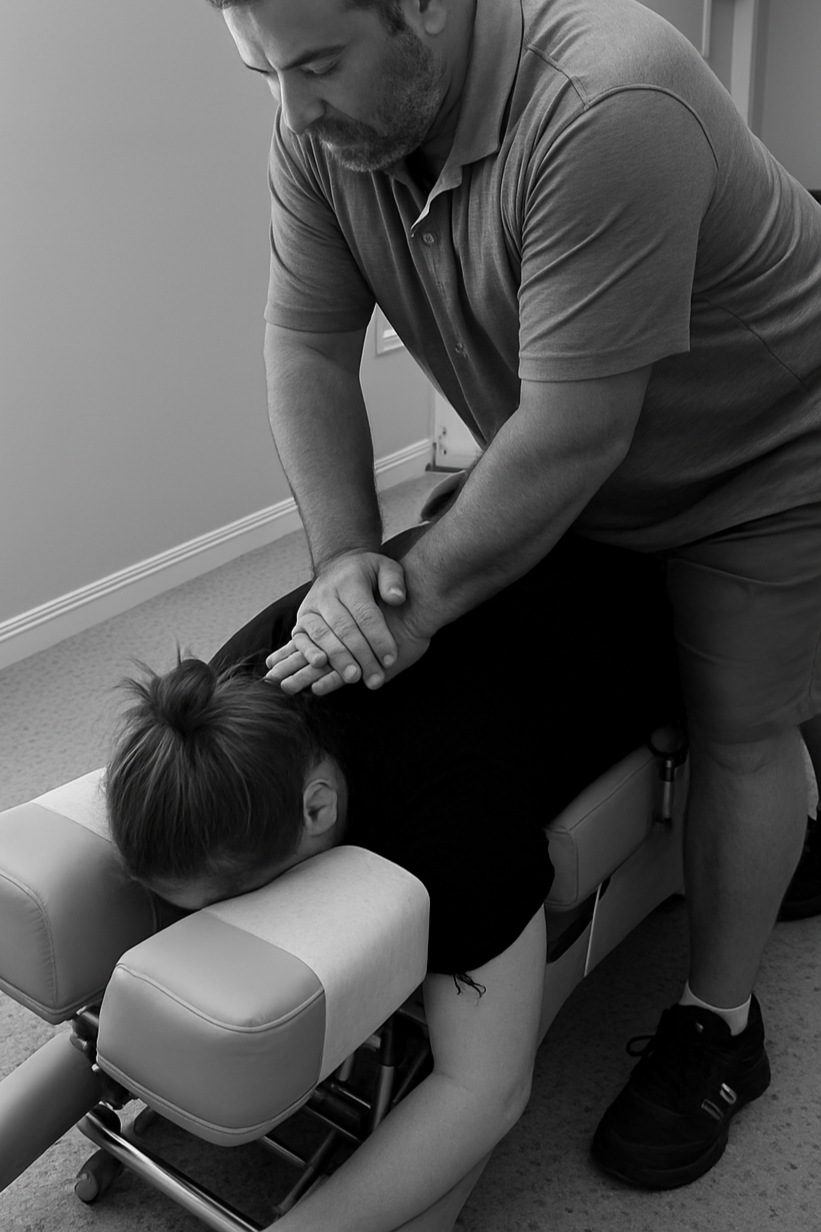
The first appointment is a conversation about your activity, not a lecture about avoiding it. Tell us what you were doing, what you felt, what you changed, and what you need to get back to. We assess the relevant joints, muscles, balance, control, and movement patterns while keeping an eye out for reasons to involve another medical professional.
Treatment depends on the injury and the stage of recovery. It may include an adjustment, soft-tissue care, shockwave therapy, mobility work, strength exercises, or guidance about training volume. The goal is to give your body an appropriate amount of challenge. Too little can make you feel fragile; too much can keep the irritation going.
As you improve, visits become more active. We may test a squat, reach, jog, lift, rotation, or single-leg task that resembles your goal. You leave with a clear next step and a way to judge your response over the following day, so decisions are based on useful information instead of guesswork or bravado.
Results and honest limits
Progress should feel useful in real life.
A gradual, more confident return to the movements your sport or hobby requires.
Better understanding of training load, recovery, and the early signs of overload.
More strength and control around the area so progress is not dependent on avoiding life.
What this care cannot promise
Rehab cannot erase the time tissues need to heal, and no plan can guarantee you will never be injured again. Some injuries need imaging, an orthopedic opinion, or a different specialist before active rehabilitation is safe. We will not push a return simply because you are eager; a durable comeback matters more than winning one workout.
If your symptoms suggest something outside chiropractic care, we’ll tell you and help you understand the next appropriate step.
Questions patients ask
A little more clarity before you call.
Do I have to stop training?
Not always. We often look for a version of training that your body can tolerate while the injured area recovers. The right modification is more useful than an all-or-nothing rule.
When can I return to my sport?
It depends on the injury and your response to increasing demand. We use movement quality, strength, symptoms, and sport-specific tasks to make the decision more clearly.
Can you help with an old injury?
Yes, an old injury can still be worth assessing if it affects your movement or keeps recurring. We look at what the area is doing now, not only what happened years ago.
Do I need a referral?
A referral is not typically needed to start a conversation, though insurance and specific medical situations can vary. Call the office if you have questions about your circumstances.
Keep exploring
Related care and useful reading.
Ready to talk it through?
Start with a conversation, not a commitment.
Tell us what’s been going on, what you’ve tried, and what you’d like to do more comfortably. We’ll help you find the right place to begin.