Chronic Back Pain Help: Why It Keeps Coming Back (And What Actually Works)

Suggested SEO title: Chronic Back Pain Help Knoxville TN: What Works
Suggested URL slug: /chronic-back-pain-help-knoxville-tn/
Meta description: Looking for chronic back pain help Knoxville TN? Learn why pain returns, how personalized care, movement, and a tailored plan can support lasting progress today.
If you’ve been looking for chronic back pain help Knoxville TN, you may already feel like you’ve tried everything. Rest, medication, stretching, exercise, or other treatments may have helped for a while. Then the pain returned.
That cycle can be discouraging. It can affect your sleep, work, workouts, and even simple activities like walking through the grocery store.
The good news is that recurring pain doesn’t mean you’re stuck. Long-lasting back pain often needs a different strategy than a recent strain. At Dr. Arthur Poisal Chiropractic, we take time to listen, assess how you move, and understand what may be keeping your symptoms active. Then we build a care plan around you.
Why chronic back pain help Knoxville TN requires a different approach
Back pain that lasts longer than 12 weeks is generally considered chronic. The National Institute of Arthritis and Musculoskeletal and Skin Diseases explains that back pain can involve several contributing factors, including the spine, discs, muscles, ligaments, nerves, fitness level, stress, sleep, and daily habits.
That’s why a single treatment or generic exercise routine doesn’t work the same way for everyone.
When pain continues for months or years, three changes often become part of the picture:
1. Your pain system may become more sensitive
Pain is a real experience created by your nervous system in response to signals from the body. When those signals continue for a long time, the nervous system can become more protective and reactive.
This may mean that movements that once felt easy now feel threatening or painful. A normal amount of bending, lifting, or sitting may create a much stronger response than you expect.
This doesn’t mean your pain is imaginary. It means your body may need help calming its protective response while you gradually rebuild strength and confidence.
2. Your muscles may stay guarded
When your back hurts, the muscles around it often tighten to protect you. That reaction can be helpful during an injury. But if it continues for too long, it may contribute to stiffness, fatigue, and limited movement.
You may begin to:
- Avoid bending or twisting
- Shift your weight to one side
- Keep your back rigid
- Hold your breath during movement
- Use your hips or legs differently
- Feel sore after ordinary activities
Over time, these habits can become automatic. The original problem may improve, but the guarded movement pattern can continue to create stress.
3. You may become deconditioned
Pain often leads people to move less. You might stop walking as far, skip the gym, avoid lifting, or spend more time sitting.
That makes sense when you’re trying to protect yourself. However, less activity can lead to reduced strength, lower endurance, and less confidence in your body. Then normal tasks feel harder, which can trigger another flare.
This creates a common loop:
Pain → less movement → reduced strength → more sensitivity → more pain
Breaking that loop usually takes more than rest.

A thorough assessment helps identify the real driver
When you’ve already tried several treatments, it’s reasonable to wonder why another plan would be different.
The answer starts with the assessment.
At our clinic, we don’t want to rush past your story. We’ll ask when your symptoms started, what makes them worse, what helps, how they affect your sleep and activities, and what you’ve already tried.
We also look at factors such as:
- Posture and movement patterns
- Spinal and joint mobility
- Muscle tension and guarding
- Strength and balance
- How you bend, walk, lift, and transition
- Your goals at home, work, or in exercise
Two people can have similar pain but different underlying drivers. One person may need more mobility work. Another may need gradual strengthening. Someone else may have a combination of joint restriction, muscle tension, poor movement habits, and fear of aggravating the pain.
A plan that helps one person may not be the right fit for another. That’s why personalized care matters.
You can learn more about our approach on our about us page.
Why staying active usually beats prolonged rest
Rest has a place. During a significant flare-up, you may need to reduce certain activities temporarily. But staying in bed or avoiding movement for too long can make it harder to recover.
Gentle, appropriate movement helps your body maintain strength, circulation, coordination, and confidence. It also gives your nervous system repeated evidence that movement can be safe.
Your starting point may be simple:
- A short walk around the block
- Standing up every 30 to 45 minutes
- Gentle hip or back mobility
- Light household activity
- A modified version of an exercise you enjoy
The goal isn’t to push through severe pain. The goal is to find a manageable level of movement and build from there.
If running is important to you, recovery may begin with walking. If you want to lift weights again, you may start with controlled bodyweight movements. If you simply want to walk comfortably, that is a meaningful goal too.
Progress should match your current ability, not someone else’s routine.
Strength and mobility support lasting progress
Pain care often works best when it addresses both mobility and strength.
Mobility work can help you move more comfortably through the hips, pelvis, and spine. Strength work helps your body tolerate daily demands with more control.
Depending on your needs, your customized plan may include:
- Rehabilitative exercises
- Core and hip strengthening
- Balance and coordination work
- Gentle mobility drills
- Walking or other low-impact activity
- Posture and movement guidance
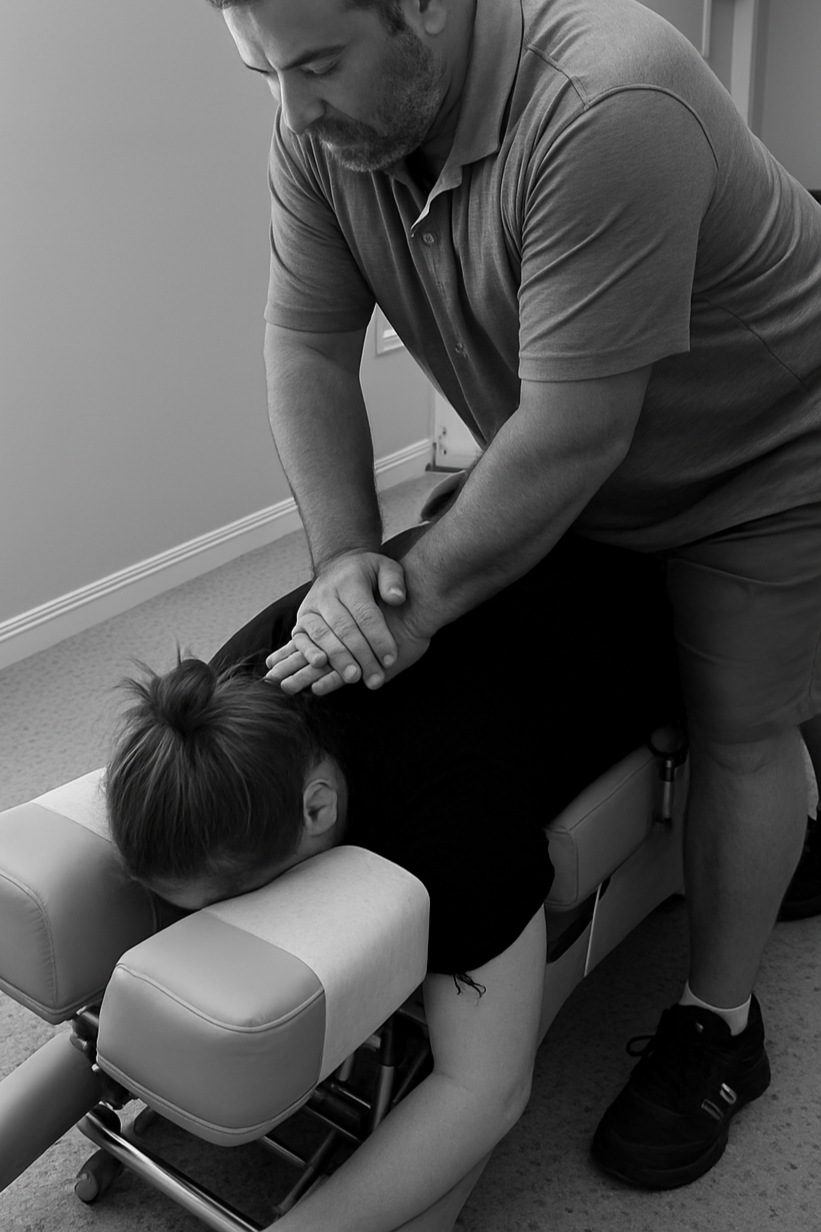
We may also use hands-on spinal adjustments to support joint movement and reduce stiffness. For certain patients, decompression therapy or shockwave therapy may be appropriate as part of a broader plan.
These services aren’t selected simply because they’re available. They’re considered based on your assessment, symptoms, goals, and response to care. You can also view our shockwave treatment information to learn more.

What should progress feel like week to week?
Many people expect recovery to improve in a straight line. Chronic pain rarely works that way.
You may have a better week followed by a more difficult day. That doesn’t automatically mean you’re back at the beginning.
Early progress may look like:
- Sleeping a little longer
- Standing up with less stiffness
- Walking farther before symptoms appear
- Recovering faster after activity
- Feeling less guarded during movement
- Needing fewer breaks during daily tasks
Later, you may notice improved strength, better tolerance for exercise, or more confidence with lifting and bending.
We’ll look at the overall trend rather than judging your progress by one day. The goal is not to promise that you’ll never have another ache. The goal is to help you understand your body, respond to symptoms, and return to the activities that matter to you.
Manage flare-ups instead of fearing them
A flare-up can feel alarming, especially if you’ve spent years worrying that one wrong movement will cause serious damage.
A flare-up doesn’t always mean you’ve caused a new injury. It may happen after a change in activity, poor sleep, stress, travel, or doing more than your body is currently conditioned to handle.
A practical flare-up plan may include:
- Reduce the activity that clearly aggravates your symptoms.
- Keep up gentle movement instead of becoming completely still.
- Use the strategies that have helped you settle symptoms in the past.
- Return to your usual activities gradually.
- Tell your care provider what changed so the plan can be adjusted.
Learning how to respond can make a flare-up feel less frightening. Instead of thinking, “I’m back to square one,” you can ask, “What does my body need today, and how can I steadily build back up?”
When should you seek medical attention?
Back pain can have many causes. Seek prompt medical attention if your symptoms follow a serious injury or occur with warning signs such as new bowel or bladder problems, significant leg weakness, numbness in the groin area, fever, unexplained weight loss, or severe pain that continues to worsen.
The NIAMS guide to back pain offers additional information about symptoms, causes, and when to speak with a medical professional.
Find a plan that fits your life
If you’ve been searching for chronic back pain help Knoxville TN, you don’t have to figure out the next step alone.
At Dr. Arthur Poisal Chiropractic, we care for patients of all ages. We take time to listen before recommending care, and we create a plan based on your symptoms, movement, health history, and goals.
Whether you want to return to running, lift weights again, keep up with your family, or simply walk comfortably, we’ll help you understand your options.
We serve patients in Knoxville, including the Whittle Springs area. If you have questions, call (865) 687-5700 or fill out our contact form and we’ll be happy to call you back.
Let’s take the next step together.