A clearer plan for recurring pain
Low Back Pain Relief
Understand the pattern behind your back pain and make daily movement feel less uncertain.
Lower back pain is common, but your version of it is personal. We look beyond the location of the ache to understand what brings it on, what eases it, and what your back needs to do for work, rest, and life.
Who this helps
Care for the life you’re trying to get back to.
This service is for people whose lower back pain keeps returning after long drives, workdays, workouts, yard work, or ordinary movement.
It can help if you have started avoiding bending, walking, lifting, or sleep positions because you are worried about the next flare-up.
Older adults may want a plan that respects arthritis, changing strength, balance, and the need to stay independent without pushing too hard.
Active adults often need more than temporary relief; they want to understand how to keep training, working, or caring for family with more confidence.
How it works
A clearer plan, explained in plain language.
Understand the story
We ask when it began, what you have tried, and how the pain changes across a normal Knoxville day.
Check the whole movement
We look at your back, hips, legs, and the movements that matter so the plan is not based on one sore spot alone.
Choose useful steps
Hands-on care, mobility work, strength, and activity guidance are selected for your goals and current tolerance.
Your care experience
What a visit and course of care can look like.
A first visit gives us time to slow down and make sense of the pattern. You can talk about pain that is sharp, dull, stiff, tight, or unpredictable. We want to know what happens when you sit, stand, walk, bend, sleep, lift, or exercise. We also review previous diagnoses and treatments so you are not asked to repeat a plan that already failed you.
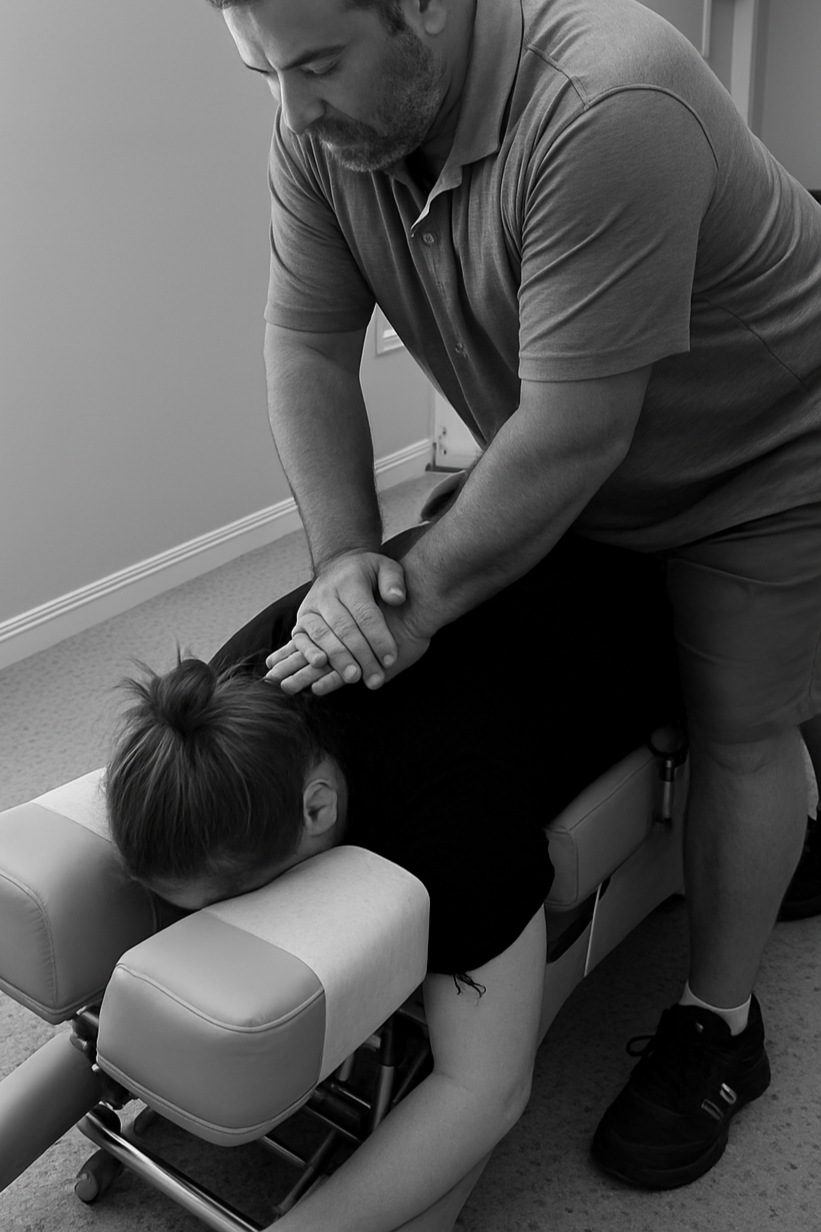
The physical assessment is practical. We observe how you move and use gentle hands-on checks to understand which areas are contributing. Your care may include an adjustment or another hands-on technique, but it may also include breathing, hip movement, trunk control, or a small change to how you do a daily task. The right plan is the one you can understand and use.
As your symptoms improve, we gradually test more of the movements you have been avoiding. The aim is not to keep you dependent on appointments. It is to help you build a back that feels more capable and a response plan for the next time life asks more of it.
Results and honest limits
Progress should feel useful in real life.
A better understanding of the triggers and patterns behind your flare-ups.
More confidence with bending, walking, lifting, sleeping, or returning to exercise.
A practical home plan that supports progress between visits and after care ends.
What this care cannot promise
No clinician can promise that lower back pain will never return. Backs change, and work, stress, sleep, injuries, and training load all matter. Our goal is useful progress and better options, not a claim that one adjustment fixes every cause. New bowel or bladder changes, saddle numbness, major weakness, fever, or severe unexplained pain needs prompt medical evaluation.
If your symptoms suggest something outside chiropractic care, we’ll tell you and help you understand the next appropriate step.
Questions patients ask
A little more clarity before you call.
Do I need an X-ray or MRI first?
Not always. Your history and movement exam often tell us a great deal. If imaging or another medical evaluation is appropriate, we will explain why instead of ordering it automatically.
Can chronic back pain really improve?
Many people can improve their comfort and function, even when pain has been present for a long time. Progress is usually built from several useful changes rather than one dramatic event.
Will I be adjusted on the first visit?
Only if it makes sense and you are comfortable. The first priority is understanding the problem and agreeing on a plan you feel good about.
What should I bring?
Bring a list of medications or prior care if useful, and be ready to describe what you want to return to. Wear clothes that let you move comfortably.
Keep exploring
Related care and useful reading.
Ready to talk it through?
Start with a conversation, not a commitment.
Tell us what’s been going on, what you’ve tried, and what you’d like to do more comfortably. We’ll help you find the right place to begin.