Decompression Therapy for Back Pain: Who It Helps and Why

SEO title: Decompression Therapy for Back Pain: Who It Helps and Why
URL slug: /decompression-therapy-for-back-pain
Meta description: Decompression therapy for back pain may help some disc-related symptoms. Learn who may benefit, what to expect, home-care tips, and when another approach is safer.
If back pain has started affecting your sleep, work, workouts, or simple daily activities, you may be looking for more than temporary relief. Decompression therapy for back pain is one nonsurgical option that may help some people, particularly when a disc is irritating a nearby nerve.
It isn’t the right choice for everyone, and it shouldn’t be treated as a cure-all. The best next step is a careful evaluation to understand what may be causing your symptoms and whether this approach fits your needs.
At Knox Chiro, serving patients in Knoxville, TN, including the Whittle Springs area, we take time to listen before recommending care. Your treatment plan should be based on your symptoms, health history, movement, and goals, not just the name of a condition.
What Is Decompression Therapy for Back Pain?
Nonsurgical decompression uses a motorized table to apply controlled, gentle stretching and relaxation to targeted areas of the spine. The goal is to reduce mechanical stress around a painful disc or irritated nerve while allowing you to remain comfortable during the session.
A disc is a cushion between the bones of your spine. When the outer portion weakens or tears, the disc may bulge or herniate. If it comes close to a nerve, you may notice:
- Aching or sharp pain in your back
- Pain traveling into the hip, buttock, or leg
- Tingling or numbness
- Pain that worsens with sitting, bending, coughing, or lifting
- Limited movement and difficulty staying active
The theory behind decompression is that carefully controlled unloading may reduce pressure in the affected area. It may also help you tolerate movement and exercise more comfortably. However, the response depends on the cause of your symptoms and your overall health.
Who May Benefit Most?
Decompression therapy for back pain may be worth discussing when your symptoms suggest a disc-related problem and your spine is stable.
People who may be considered include those with:
Disc bulges or herniations
A bulging or herniated disc can irritate a nerve root. This may create pain in the low back, buttock, or leg. If your symptoms match the location of a disc problem, decompression may be included as part of a broader care plan.
Imaging can sometimes provide useful information, but a scan is only one part of the evaluation. Many people have disc changes without pain. That’s why we also consider your symptoms, strength, sensation, posture, and movement.
Radiating leg pain
Some people describe leg symptoms as burning, electric, sharp, or deep. These symptoms can occur when a nerve is irritated in the lower spine. If the primary problem is nerve irritation related to a disc, a carefully selected plan may help reduce discomfort and improve movement.
Degenerative disc changes
Discs naturally change as you age. These changes do not always cause symptoms, but they can contribute to stiffness and recurring pain in some people. Decompression may be considered when disc-related symptoms continue despite initial conservative care.
Persistent pain that limits activity
You may also be a candidate if pain has made it difficult to walk comfortably, exercise, lift, work, or sleep, and an evaluation suggests that disc pressure may be contributing.
This does not mean you need to avoid all movement. In fact, the long-term goal of decompression therapy for back pain should be to help you gradually return to useful movement and daily activities.

What Does the Research Suggest?
Research on decompression therapy for back pain is promising in some areas but still mixed overall.
A randomized controlled trial involving adults with lumbar nerve-root symptoms found that nonsurgical decompression added to routine physical therapy produced greater short-term improvements in pain, movement, disability, and some quality-of-life measures than physical therapy alone after four weeks. The study included 12 treatment sessions and focused on a specific group of patients.
That finding is useful, but it does not prove that the same results will occur for everyone. Other reviews have found that the quality of evidence varies. Some studies are small, lack long-term follow-up, or do not clearly show that motorized decompression is better than other forms of traction or conservative care.
The most honest way to view it is this: decompression may be helpful for selected patients, especially when disc-related nerve irritation is part of the picture. It works best when it is combined with appropriate movement, strengthening, education, and progress monitoring.
We’ll never promise that one treatment will solve every case. Instead, we’ll look for meaningful changes in your pain, mobility, strength, sleep, and ability to do the activities that matter to you.
What Can You Expect During a Course of Care?
Your first visit should begin with a conversation and a thorough assessment. We’ll ask:
- When did your symptoms begin?
- What makes them better or worse?
- Does pain travel into your arm or leg?
- Have you noticed numbness or weakness?
- What activities are you avoiding?
- What treatments have you already tried?
We may assess your posture, walking pattern, range of motion, strength, and responses to specific movements. If your history suggests that you need medical imaging or another type of evaluation, we’ll discuss that rather than forcing you into a treatment that may not fit.
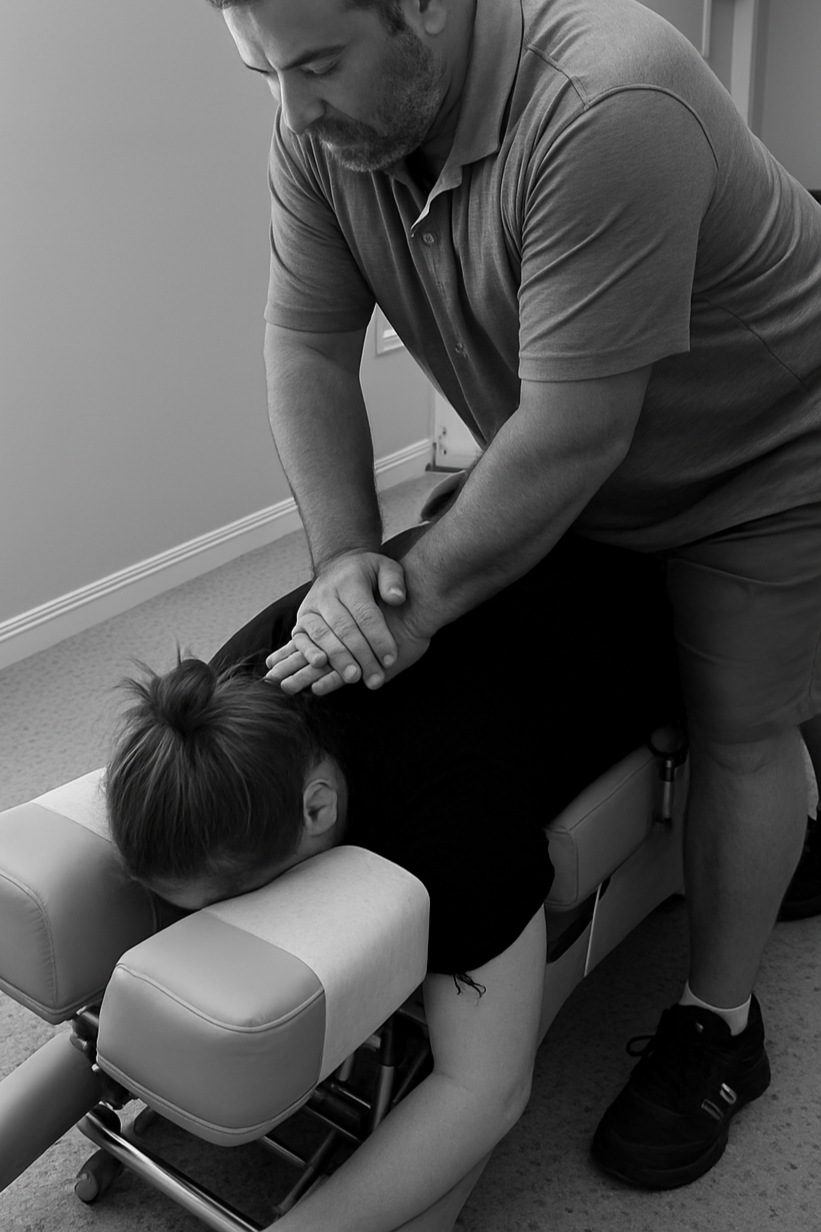
If decompression is appropriate, sessions are generally performed while you’re supported on a table. The amount of movement and force should be adjusted to your comfort and response. You should be able to communicate if something feels too strong, uncomfortable, or different from what you expected.
The number of visits varies. Some people respond quickly, while others need more time and a gradual progression. We’ll reassess your response instead of assuming that a fixed schedule is right for everyone.
Depending on your needs, your plan may also include:
- Hands-on spinal adjustments
- Rehabilitative exercises
- Posture and lifting guidance
- Activity modifications
- Shockwave therapy for selected muscle, tendon, or soft-tissue concerns
Our focus is not simply getting you through a treatment session. It’s helping you work toward lasting progress, whether that means running again, lifting weights with more confidence, or walking comfortably through the day.
What Should You Do at Home?
Your results are influenced by what happens between visits. Home care should be realistic and tailored to your current abilities.
Helpful habits may include:
- Taking short walks instead of remaining in bed for long periods
- Changing positions regularly if sitting increases your symptoms
- Using lifting techniques that keep the load close to your body
- Following the exercises provided for your current stage
- Avoiding sudden increases in running, lifting, or bending
- Paying attention to sleep positions and supportive comfort measures
- Tracking which activities improve or aggravate your symptoms

Exercises should not create sharp, escalating, or spreading pain. If a movement consistently makes your leg symptoms worse, stop and let your provider know. A good program should build confidence gradually rather than leave you feeling that you have to push through everything.
How Can You Tell If It’s Working?
Improvement is not always immediate, and pain intensity is only one measure. Signs that decompression therapy for back pain may be helping can include:
- Pain becomes less intense or less frequent
- Leg symptoms move closer to the back or become less widespread
- You can sit, stand, or walk for longer
- Your range of motion improves
- Sleep becomes easier
- You need fewer breaks during normal activities
- You feel more confident moving
- You can slowly resume exercise or household tasks
We may also compare your movement, strength, and daily function over time. The goal is progress that you can notice in real life, not just a temporary change while you’re on the treatment table.
If symptoms are not improving, or if they are getting worse, that matters too. It may mean the plan needs to change or that another type of evaluation is needed.
Who Is Not a Good Candidate?
Decompression therapy for back pain may not be appropriate if you have a condition that makes spinal loading or traction unsafe. Depending on the situation, this can include:
- A recent or unstable spinal fracture
- Severe osteoporosis
- A spinal tumor or suspected serious disease
- Significant spinal instability
- Certain cases of advanced spinal narrowing
- Recent spinal fusion or hardware in the treatment area
- Pregnancy, unless your medical providers specifically confirm that a treatment is appropriate
- Progressive neurological changes
You also should not use decompression as a substitute for urgent medical care. Seek immediate medical attention for new loss of bladder or bowel control, numbness in the saddle area, sudden significant weakness, or severe symptoms after major trauma.
A different approach may be safer and more effective for some people. That might include medical management, physical therapy, a referral for imaging, or consultation with a spine specialist. A responsible care plan should make room for those options.
Find Out Whether It Fits Your Needs
If you’re considering decompression therapy for back pain in Knoxville, TN, we’re here to help you understand your options. At Knox Chiro, we provide personalized care for patients of all ages and take time to understand what you’re experiencing before creating a plan.
You can learn more through our frequently asked questions, or take the next simple step by calling (865) 687-5700. You can also fill out our contact form, and we’ll be happy to call you back.
We’ll listen, answer your questions, and help you decide what makes sense for your body and your goals.