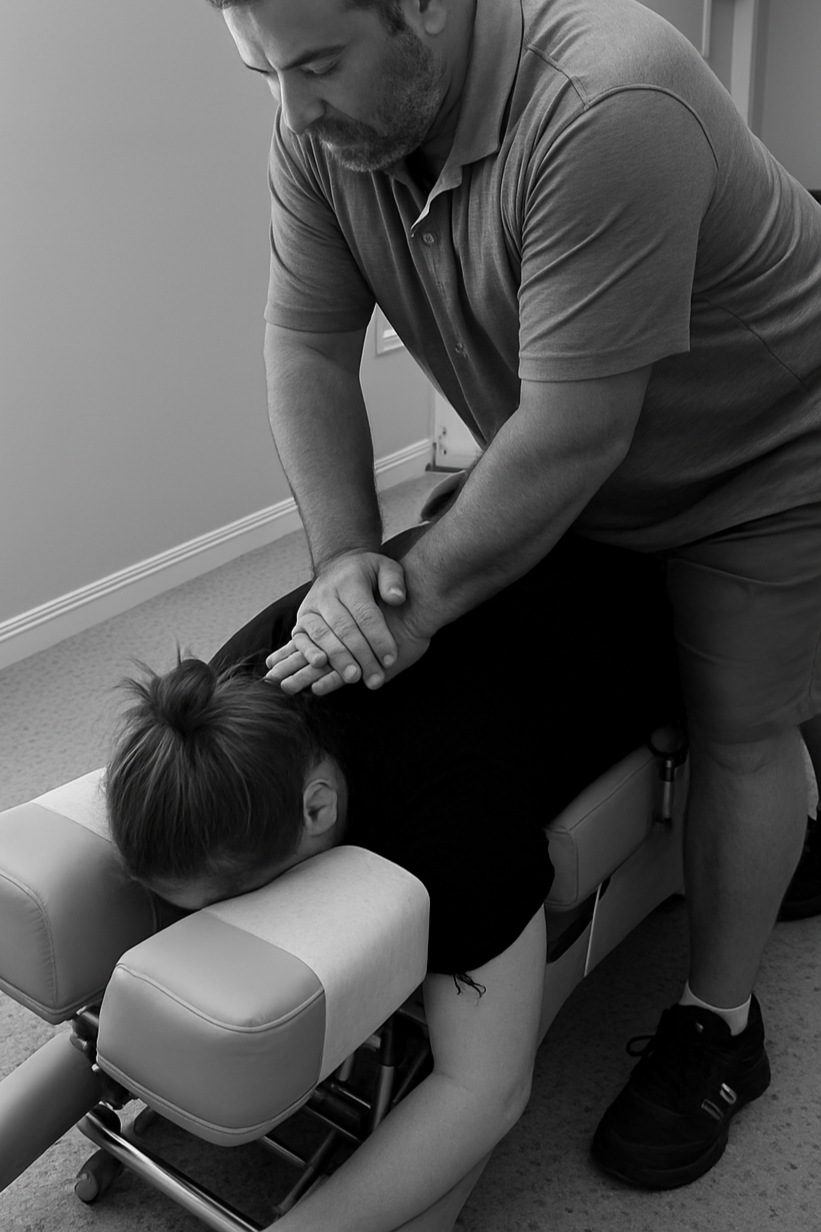
A gentler option for disc-related pain
Spinal Decompression Therapy
More room for your spine to settle, move, and heal without surgery.
Spinal decompression is a low-force, non-surgical approach for people whose back or leg pain may be connected to a disc. We start by understanding your symptoms, your daily limits, and what you have already tried.
Who this helps
Care for the life you’re trying to get back to.
People with persistent low back pain that travels into the hip, buttock, or leg may find a careful decompression conversation useful.
It can be a good fit for someone told they have a bulging or herniated disc and who wants to explore conservative care before considering more invasive options.
Active adults often choose this service when pain has made lifting, walking, training, or sleeping feel uncertain.
If you have tried rest, medication, injections, or general exercise without lasting progress, a more specific assessment can help clarify the next step.
How it works
A clearer plan, explained in plain language.
Listen and assess
We map where symptoms travel, what changes them, and whether your story fits disc-focused care.
Create gentle space
A controlled table-based technique uses comfortable, measured movement to reduce pressure and irritation around the spine.
Build support
As symptoms settle, we add movement and strength work so your back can handle more of everyday life.
Your care experience
What a visit and course of care can look like.
Your first visit is not a race to put you on a machine. Dr. Poisal asks about the beginning of the problem, the sensations you notice, your work and activity demands, and any care you have already received. He also checks movement and other clues that help determine whether decompression is appropriate. If something points elsewhere, you will hear that clearly.
When it is a reasonable fit, you lie comfortably on a specialized table while the spine is moved in a carefully selected way. The sensation should be controlled and tolerable, never something you have to grit your teeth through. Visits are usually paired with simple advice about positions, walking, lifting, or exercises that support the progress between appointments.
A course of care is adjusted as your body responds. Early visits may focus on calming symptoms and making daily movement less guarded. Later visits can shift toward building confidence, trunk control, and the habits that reduce the chance of the same flare-up taking over again.
Results and honest limits
Progress should feel useful in real life.
Less leg or back pain during the movements that used to provoke it.
More comfortable sleep, walking, sitting, or lifting as irritation settles.
A clearer understanding of what your spine needs next, including useful home steps.
What this care cannot promise
Decompression is not a guaranteed fix for every disc problem, and it cannot reverse every structural change seen on an image. Progress may be gradual, and some people need a different combination of hands-on care, exercise, or medical evaluation. Severe or worsening weakness, loss of bladder or bowel control, or sudden major numbness needs urgent medical attention rather than a routine appointment.
If your symptoms suggest something outside chiropractic care, we’ll tell you and help you understand the next appropriate step.
Questions patients ask
A little more clarity before you call.
Does spinal decompression hurt?
Most people describe the technique as a gentle pulling or stretching sensation. It should not feel sharp or alarming. We adjust or stop if your body does not tolerate it well.
How many visits will I need?
There is no responsible one-size-fits-all number. Your response, the duration of symptoms, and your goals help shape the plan, which we revisit as you improve.
Can decompression help sciatica?
It may help when sciatic symptoms are connected to irritation around a spinal disc. The first assessment matters because not every case of leg pain has the same source.
Will I still need exercises?
Usually, yes. Gentle decompression may calm the problem, while well-chosen movement helps you keep the gains and return to normal activity.
Keep exploring
Related care and useful reading.
Ready to talk it through?
Start with a conversation, not a commitment.
Tell us what’s been going on, what you’ve tried, and what you’d like to do more comfortably. We’ll help you find the right place to begin.