Joint Pain Relief in Knoxville: When the Problem Isn't Where It Hurts

SEO title: Joint pain relief chiropractor knoxville | Whole-body care
URL slug: /joint-pain-relief-chiropractor-knoxville/
Meta description: Need a joint pain relief chiropractor knoxville? We assess hips, knees, shoulders, and ankles to create a personalized plan for easier movement and comfort.
Joint pain can be frustrating, especially when the sore spot doesn’t seem to explain the whole problem. Your knee may hurt when you walk. Your shoulder may ache when you reach overhead. Your hip may feel tight after sitting, or your ankle may stay stiff after an old injury.
But sometimes, the painful joint is only one part of the story.
When you search for “joint pain relief chiropractor knoxville,” you’re often looking for more than temporary relief. You want to understand why the pain keeps returning and what you can do to move with more confidence.
At Dr. Arthur Poisal Chiropractic, we look at how your body works as a connected system. We take time to listen, perform a thorough assessment, and create a customized plan based on your goals. If you’re in Knoxville TN, including the Whittle Springs area, we’re here to help you take the next step toward moving more comfortably.
Pain can start somewhere else
Your joints work together every time you stand, walk, run, lift, or reach. When one area becomes stiff or weak, another area may have to work harder.
For example:
- A stiff ankle can change how your foot rolls and how your knee absorbs force.
- A weak or poorly moving hip can place extra stress on the knee or lower back.
- Limited movement in the upper back can make the shoulder work harder during overhead activity.
- A pelvis or spine that isn’t moving well can affect how you walk and load both legs.
- An old injury can change your movement habits long after the original pain fades.
This doesn’t mean every knee, hip, shoulder, or ankle problem comes from another part of the body. Sometimes the joint itself is injured or inflamed. The important point is that the whole movement pattern deserves attention.
Treating only the sore spot may provide short-term improvement. Looking at the connected areas can help us understand what may be keeping the irritation going.

Why alignment and mechanics matter
Alignment is not about forcing your body into a perfect position. It is about how your joints, muscles, and spine share movement and load.
If one area is not doing its part, another may compensate. You might notice this as:
- Pain when climbing stairs
- A knee that turns inward during a squat
- One-sided hip tightness
- Shoulder discomfort when lifting
- An ankle that feels unstable
- A change in your walking or running stride
- Stiffness after sitting or sleeping
These patterns can develop gradually. You may not remember a specific injury. Instead, the problem builds as your body repeats the same compensation day after day.
That’s why a careful evaluation matters. We want to understand what movements bother you, what activities you’ve had to avoid, and what your body is doing when the pain appears.
How we assess the whole movement chain
At your first visit, we’ll talk about your symptoms, health history, daily activities, and goals. We’ll also assess posture, mobility, joint motion, and the way different areas work together.
Depending on your concerns, we may look at:
- Your spine and pelvis
- Hip strength and mobility
- Knee tracking and leg control
- Foot and ankle movement
- Shoulder and upper-back mechanics
- Balance and coordination
- How you squat, walk, reach, or lift
This assessment helps us decide which services may be appropriate. A plan for shoulder pain may look very different from a plan for ankle stiffness or hip-related knee pain.
Our goal is not to put everyone on the same routine. We take time to listen before recommending care, then adjust the plan as your movement and comfort improve.
You can learn more about our approach on our about us page.
Where hands-on care may fit
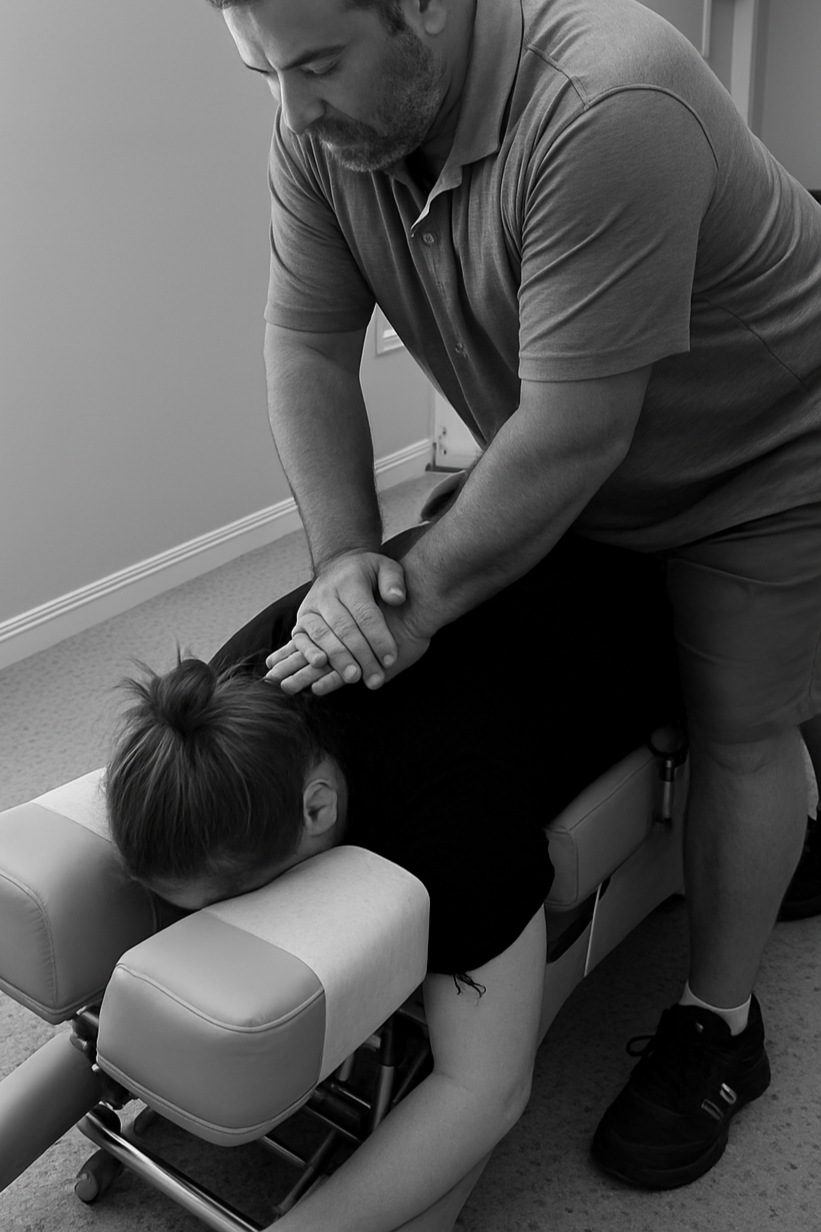
Hands-on adjustments may help restore motion in areas that feel restricted. This can include the spine, pelvis, or other joints that are affecting the way you move.
When appropriate, adjustments may reduce stiffness and help your body distribute movement more evenly. They are not meant to replace strengthening, activity changes, or medical evaluation when those are needed. Instead, they can be one part of a broader care plan.
If spinal or pelvic mechanics are contributing to pressure and irritation, decompression therapy may also be considered. This approach is focused on reducing stress through the spine and supporting more comfortable movement. It may be useful when joint symptoms are connected with spinal stiffness or pressure.
Every person responds differently. We’ll explain what we’re doing, answer your questions, and monitor how your body responds.
When shockwave therapy may help
Some joint complaints are closely related to irritated tendons, ligaments, or other soft tissues around the joint. This is common with stubborn shoulder pain, elbow pain, heel and ankle problems, and certain activity-related injuries.
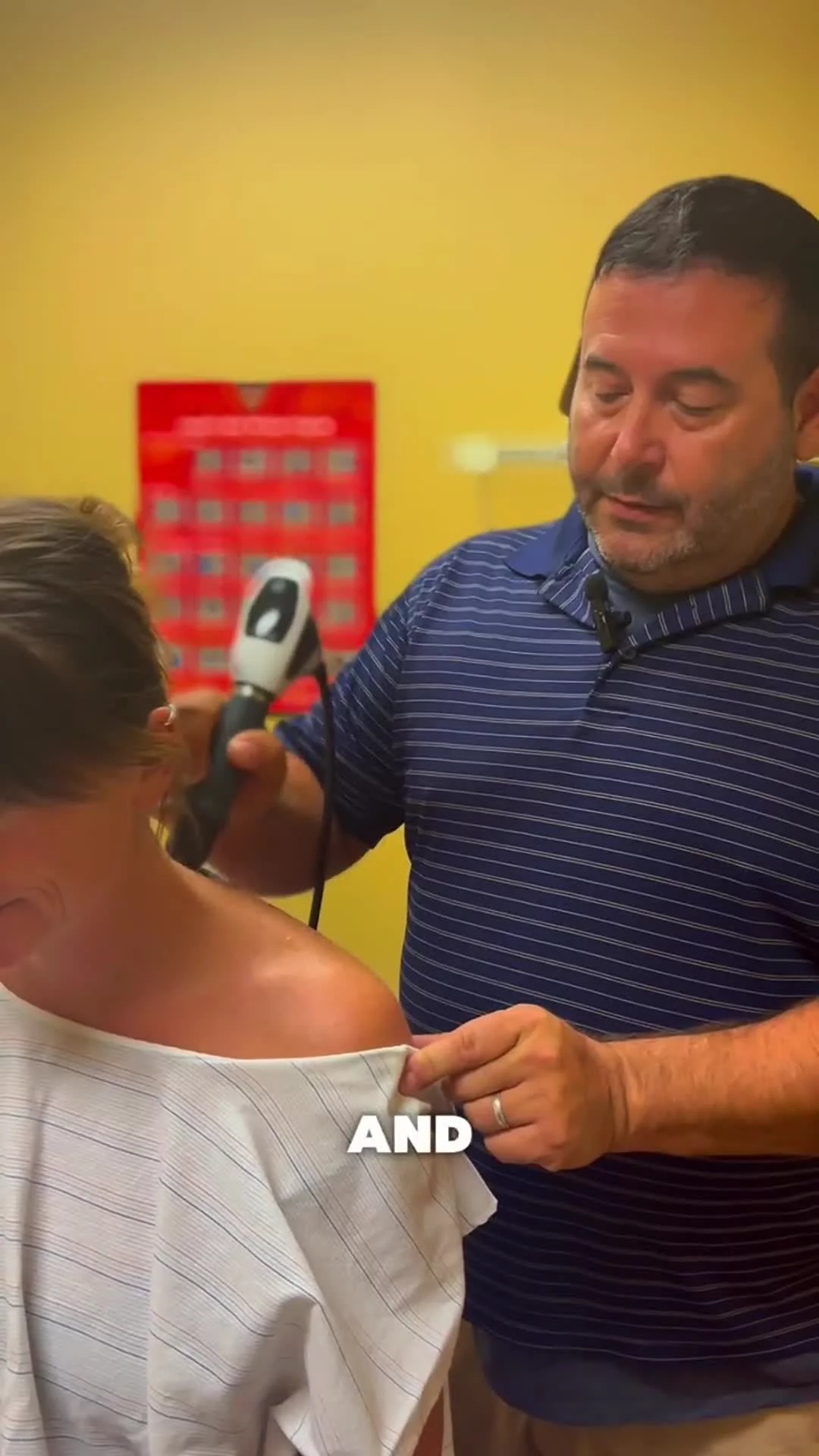
Shockwave therapy uses acoustic waves directed at the treatment area. It may help stimulate a healing response and improve comfort in tissues that have been irritated for a long time.
It is not the right choice for every condition, and it does not replace an accurate assessment. But for some people, it can be a useful part of a non-invasive plan, especially when traditional rest has not solved the problem.
We have a short shockwave therapy basics video if you’d like to learn more about how this therapy works.
Build support with rehabilitative exercises
Pain relief is important, but your long-term progress also depends on how well your body handles daily demands.
Rehabilitative exercises can help you build support around a painful joint. Your plan may include exercises for:
- Hip and leg strength
- Core control
- Shoulder stability
- Ankle mobility
- Balance
- Posture
- Coordination
- Gradual return to activity
The exercises should match your current ability. If you’re in pain, starting too aggressively can create another setback. We can help you find the right level and progress gradually.
The goal is practical. We want you to feel more capable when you walk, climb stairs, exercise, work, or enjoy time with your family.
Stay active without pushing through pain
Complete rest can feel safe, but too much inactivity may lead to more stiffness and weakness. In many cases, gentle movement is better than avoiding activity altogether.
Try these general guidelines:
- Choose low-impact movement, such as walking or gentle cycling, if tolerated.
- Break long periods of sitting with short movement breaks.
- Reduce the intensity before stopping all activity.
- Avoid repeatedly testing the painful movement.
- Use comfortable ranges of motion rather than forcing a stretch.
- Pay attention to how you feel later that day and the next morning.
- Return to running, lifting, or sports gradually.
A little discomfort does not always mean harm, but sharp, worsening, or persistent pain deserves attention. If a joint is swollen, unstable, locked, numb, unusually warm, or difficult to use, seek an appropriate professional evaluation. Sudden severe pain after an injury may require urgent medical care.
Joint pain relief chiropractor knoxville patients can feel comfortable visiting
Choosing care for joint pain should not feel like a rushed decision. You deserve a provider who listens to what you’re experiencing and explains the next steps clearly.
At Dr. Arthur Poisal Chiropractic, we care for patients of all ages. Some people want to return to running or lifting weights. Others want to sleep comfortably, walk without hesitation, or keep up with everyday responsibilities.
We focus on your individual goals and progress. Care may include hands-on adjustments, decompression therapy, shockwave therapy, and rehabilitative exercises when appropriate. We can also help you understand when another type of provider or additional evaluation may be the better next step.
WHAT PATIENTS HAVE SAID…
“Year after year i keep going back to see Dr Art. He understands my concerns as i age, and can work on any issues that arise to help me feel my best and perform at an active level. Thank you!”
- Cynthia Jefferies
If joint pain is limiting your movement, you don’t have to figure it out alone. Call (865) 687-5700, or complete the contact form and we’ll be happy to call you back. Let’s talk about what you’re experiencing and whether personalized care may be a good fit.