When the sore spot is not the whole story
Joint Pain Relief
Look at the whole movement, not just the joint asking for attention.
A painful knee, hip, shoulder, or foot can be affected by what happens above and below it. We take the time to understand the joint, the surrounding movement, and the life you are asking your body to handle.
Who this helps
Care for the life you’re trying to get back to.
People with knee, hip, shoulder, ankle, or other joint pain may benefit when the location of pain has not explained why it keeps returning.
Active adults can use a whole-body assessment when a joint hurts during running, lifting, stairs, golf, gardening, or a favorite class.
Older adults often want to stay mobile even when arthritis, past injuries, or strength changes make movement feel less predictable.
It can help if you have treated the joint alone but have not looked at how your back, hips, feet, or upper body share the load.
How it works
A clearer plan, explained in plain language.
Find the relationship
We compare the painful joint with nearby areas and the tasks that bring symptoms on.
Reduce the extra work
Hands-on care and movement changes can help the body distribute force more comfortably.
Build useful capacity
Exercises and activity guidance help the joint tolerate more of the life you want to live.
Your care experience
What a visit and course of care can look like.
The first visit is a chance to describe the problem in your own words. We ask whether it is new or longstanding, what it feels like, what makes it worse, and what you have tried. We also talk about your goals: walking farther, stairs, exercise, or turning over in bed with less worry.
The assessment may look at the painful joint and the areas that influence it. A knee can be affected by hip strength and foot control. A shoulder can respond to the upper back and ribs. A hip can be part of a larger back and walking pattern. This does not mean we ignore the joint. It means we want an explanation useful enough to guide care.
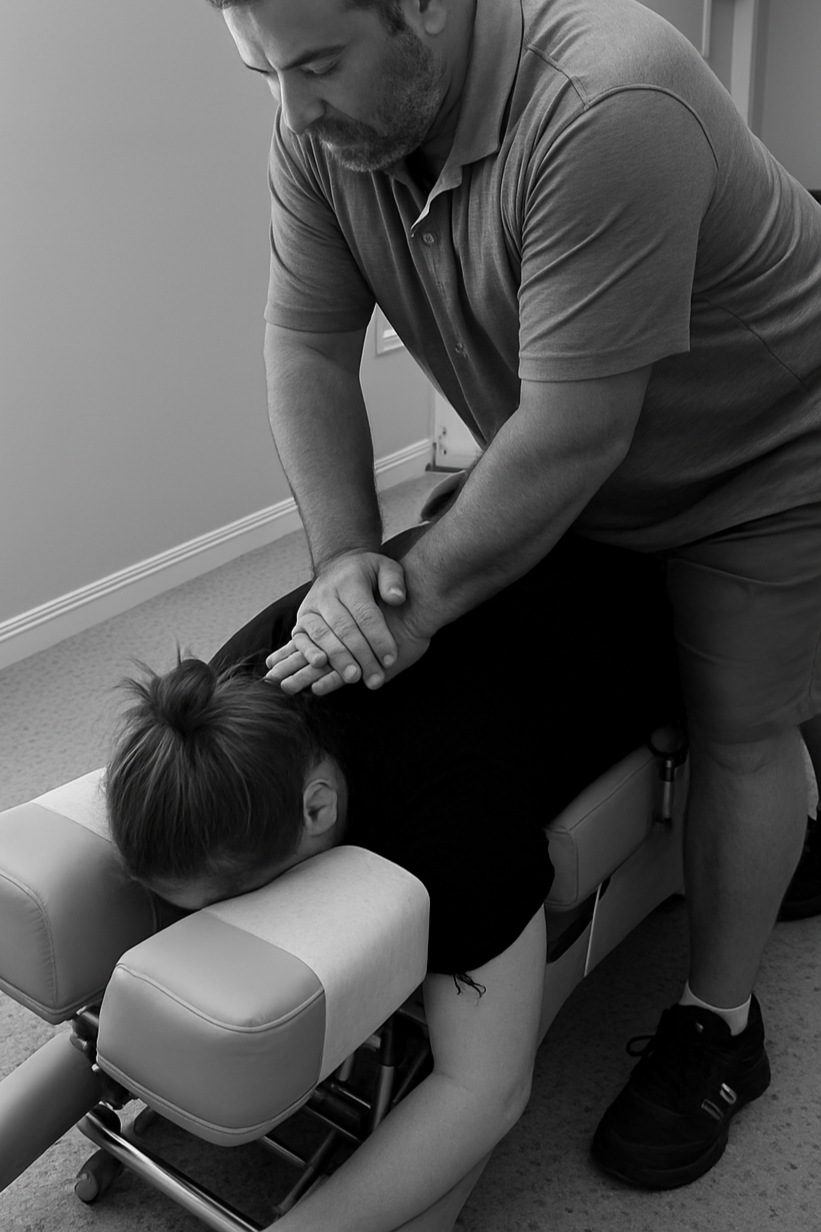
Treatment can include a chiropractic adjustment, gentle mobility work, soft-tissue care, exercise, or a recommendation for additional medical evaluation. We keep the plan practical and change it when your response gives us new information. The goal is not to force a joint through pain. It is to help you regain options while respecting what the body can handle today.
Results and honest limits
Progress should feel useful in real life.
A clearer explanation of the forces and movements that may be irritating the joint.
Better tolerance for walking, stairs, reaching, squatting, or the activity you miss.
A whole-body plan that supports the painful area without ignoring the rest of you.
What this care cannot promise
Joint care cannot rebuild every worn surface or guarantee that arthritis and age-related changes will disappear. Some pain needs imaging, medication management, injection, or orthopedic care, and we will say so when the findings point that way. Sudden inability to bear weight, major swelling, deformity, fever, or a hot red joint deserves prompt medical attention.
If your symptoms suggest something outside chiropractic care, we’ll tell you and help you understand the next appropriate step.
Questions patients ask
A little more clarity before you call.
Why does the joint hurt if the problem may be somewhere else?
The body shares load across connected joints and muscles. A painful area is still important, but nearby movement can change how much work it has to do.
Can chiropractic care help arthritis?
It may help you move more comfortably and maintain function, but it does not remove arthritis. We focus on useful movement and will coordinate other care when needed.
Will you only treat the painful joint?
We will assess it carefully, then look at the surrounding movement that may be contributing. Treatment stays connected to the task you want to do more comfortably.
What if I have already seen an orthopedist?
Bring what you know from that visit. Chiropractic and rehabilitation care can sometimes support the plan you already have, as long as it is appropriate and coordinated.
Keep exploring
Related care and useful reading.
Ready to talk it through?
Start with a conversation, not a commitment.
Tell us what’s been going on, what you’ve tried, and what you’d like to do more comfortably. We’ll help you find the right place to begin.