Rehabilitative Exercises in Knoxville, TN: Why They Keep Pain Away

Pain relief matters. But lasting progress often depends on what you do between appointments.
Rehabilitative exercises in Knoxville TN can help you build the strength, balance, and movement control your body needs to support your spine and joints. They’re not meant to replace hands-on care. Instead, they help you hold on to the progress made during treatment and return to the activities you enjoy.
At Dr. Arthur Poisal Chiropractic, we take time to listen to your concerns, assess how you move, and create a plan around your specific needs. Whether your goal is running again, lifting weights, or simply walking comfortably, exercise is an important part of the process.
Why passive treatment alone may not be enough
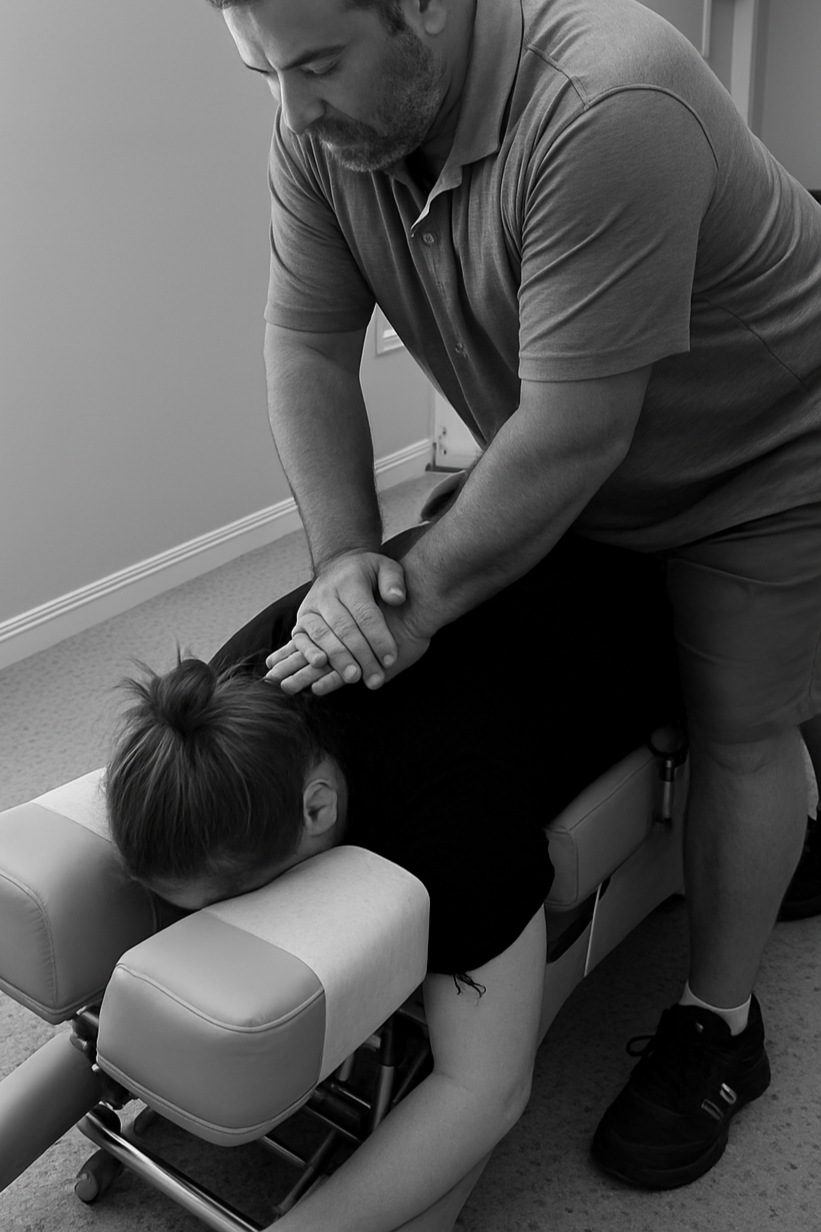
Adjustments and other hands-on treatments can help improve joint movement and reduce discomfort. That relief can make it easier to move. However, passive care alone doesn’t always build the strength and coordination needed to protect your body during everyday activities.
Think of it this way: an adjustment may help improve how a joint moves, but your muscles still need to learn how to control that movement. If your core, hips, or supporting muscles are not doing their share of the work, the same strain may return when you sit, bend, lift, walk, or exercise.
That doesn’t mean hands-on care has no value. It means the most useful plan often combines several pieces:
- Hands-on adjustments to support joint movement
- Decompression therapy when appropriate
- Shockwave therapy for certain soft-tissue concerns
- Mobility work to improve comfortable movement
- Strength and control exercises to support daily function
Your plan should be based on your symptoms, health history, movement patterns, and goals, not on a generic routine printed from the internet.
How rehabilitative exercises in Knoxville TN build support
A good exercise plan does more than make a muscle tired. It helps your body coordinate movement more efficiently.
Your deep abdominal muscles, glutes, hips, and back muscles work together to support your spine. When those muscles are weak, delayed, or poorly coordinated, other areas may have to work harder. Over time, this can contribute to stiffness, muscle tension, and recurring discomfort.
A gradual program may help you:
- Improve core endurance
- Build hip and glute strength
- Control your pelvis and spine during movement
- Improve balance and body awareness
- Tolerate walking, lifting, and exercise more comfortably
- Return to activity with greater confidence
Research and clinical guidelines commonly support exercise that includes trunk strengthening, motor control, mobility, and aerobic activity for people dealing with ongoing back concerns. You can learn more about general back health from the Mayo Clinic’s back pain guidance.

Movements we may include in your plan
The exercises you receive will depend on your assessment. Still, many personalized programs include a combination of the following movement types.
Core and hip stability
Core stability is not about doing hundreds of sit-ups. It’s about learning to keep your trunk controlled while your arms and legs move.
Your program may include gentle exercises such as:
- Pelvic control drills
- Dead bug variations
- Bird-dog movements
- Modified planks
- Controlled marching
- Breathing with deep abdominal activation
Hip stability is also important. Your hips help absorb force when you walk, climb stairs, squat, or change direction. Exercises may include bridges, clamshells, side steps, or supported single-leg work.
Glute and deep core activation
Many people have difficulty using their glutes or deep abdominal muscles effectively, especially after an injury or a long period of avoiding movement.
We may begin with simple positions that make it easier to feel the right muscles working. For example, a bridge may help you practice engaging your glutes without overusing your lower back. A controlled abdominal brace may help you support your spine while breathing normally.
The goal isn’t to create soreness. The goal is to improve control.
Gentle mobility work
Strength is only one part of comfortable movement. If your hips, mid-back, or other joints are stiff, your body may compensate during daily tasks.
Gentle mobility work may include:
- Hip mobility movements
- Comfortable trunk rotations
- Hamstring or hip-flexor stretches
- Shoulder and upper-back movement
- Controlled range-of-motion exercises
Mobility exercises should feel purposeful and manageable. You should not have to force a joint through sharp pain to make progress.
Progressive loading
Once you can perform basic movements with good control, your program may gradually become more challenging. This is called progressive loading.
Progression might mean:
- Adding a few repetitions
- Holding a position longer
- Using a light resistance band
- Moving from lying down to standing
- Practicing a squat or step-up
- Carrying a light weight with proper control
The right amount of challenge depends on your symptoms and current ability. We want to help your body become more capable without creating a flare-up that sets you back.

Your exercises should match your problem
A generic handout may include useful movements, but it cannot account for your specific history.
For example, two people may both report back discomfort but need very different approaches. One person may need to improve hip strength. Another may need more gentle mobility. Someone else may need to rebuild confidence with lifting after an injury.
That’s why we start by listening. We want to understand:
- When your symptoms began
- Which activities make them better or worse
- How your pain affects sleep and daily life
- Whether you have numbness, weakness, or other symptoms
- What activities you want to return to
- What you have already tried
From there, we can create a customized plan and adjust it as you improve. Our about our clinic page explains more about our patient-centered approach and the services we provide for people of all ages.
How often should you do the exercises?
Consistency beats intensity.
You do not need to complete a difficult workout every day to make progress. In many cases, a short routine performed consistently is more useful than an intense session followed by several days of soreness.
Your plan may include:
- Gentle mobility work most days
- Strength and control exercises two to four times per week
- Walking or another comfortable activity as tolerated
- Short movement breaks during long periods of sitting
We’ll help you understand which exercises belong in your regular routine and which ones should be used only at certain stages. If a movement causes sharp pain, increasing symptoms, new weakness, or symptoms that do not settle, stop and let us know.
How we measure progress
Progress is not measured only by whether your pain reaches zero. We also look at what you can do more comfortably and confidently.
Depending on your goals, we may track:
- How long you can walk
- How comfortably you can sit or stand
- Your ability to bend, reach, or lift
- Balance and single-leg control
- Strength and endurance
- Range of motion
- How often symptoms interrupt sleep
- Whether you can return to running, lifting, or other activities
Small improvements matter. You may first notice that getting out of a chair feels easier. Later, you may walk farther, sleep better, or return to exercise with less hesitation.
How exercise fits with the rest of your care
Rehabilitative exercises are one part of a complete plan. Depending on your needs, we may combine them with hands-on adjustments, decompression therapy, or shockwave therapy.
An adjustment may help improve movement so you can perform an exercise more comfortably. Decompression may be considered when pressure or irritation is affecting your ability to move. Shockwave therapy may be useful for certain muscle, tendon, or soft-tissue concerns.
The purpose of combining treatments is not to do more for the sake of doing more. It’s to address different parts of the problem while helping you become more active and independent.
You can also visit our FAQ page to learn more about what to expect from care. Our low and mid-back treatment video offers another look at how we support patients with movement-related concerns.

Start with a plan that fits you
You don’t have to figure out the right exercises on your own. If pain or stiffness has kept you from moving the way you want, we’ll take time to understand what’s going on and explain your options clearly.
Our goal is to help you feel better, move better, and build the confidence to stay active. We welcome patients of all ages in Knoxville, including the Whittle Springs area and surrounding communities.
If you’re ready to take the next step, call us at (865) 687-5700 or fill out our contact form and ask for a call back. We’ll be happy to listen and help you get started.

SEO details
SEO title: Rehabilitative Exercises Knoxville TN | Knox Chiro
URL slug: /rehabilitative-exercises-knoxville-tn
Meta description: Learn how rehabilitative exercises in Knoxville TN build core strength, improve mobility, and support lasting progress with personalized chiropractic care.