Neck and Back Pain Relief in Knoxville: Why Your Desk Job Hurts

SEO title: Neck and Back Pain Relief Knoxville | Desk Pain
URL slug: /neck-and-back-pain-relief-knoxville/
Meta description: Need neck and back pain relief Knoxville? Learn how desk work, phones, and commutes fuel pain, plus simple steps and care options to help you move better.
If you’re searching for neck and back pain relief Knoxville, your desk, laptop, phone, or daily commute may be part of the problem.
Many people don’t hurt because of one major injury. Instead, discomfort builds slowly. You spend hours at a computer, look down at your phone between meetings, drive across town, and then relax in the same rounded position at home.
Over time, your neck, shoulders, and back may start working harder than they should.
The good news is that small changes can help. A better workstation, regular movement, and a careful assessment can give you a clearer path forward.
Why desk work can lead to neck and back pain
Your body is designed to move. It isn’t designed to hold one position for eight or more hours each day.
When you lean toward a screen, your head moves forward over your shoulders. The muscles at the base of your skull, across your shoulders, and between your shoulder blades have to work constantly to support you.
At the same time, your upper back may round and your lower back may lose its natural curve. This can create a chain reaction:
- Your neck muscles become tight and tired.
- Your shoulders begin to feel heavy or tense.
- Your upper back may ache or burn between the shoulder blades.
- Your lower back may stiffen from prolonged sitting.
- Your hips may become tight and uncomfortable.
- Standing, walking, or exercising may feel more difficult.
Even “good posture” can become uncomfortable if you hold it without changing position. The goal isn’t to sit perfectly still. The goal is to create a workstation that supports you while giving your body frequent opportunities to move.
Your phone may be adding to the problem
A laptop isn’t the only source of screen-related discomfort. Looking down at your phone can place your neck in a bent position for several minutes at a time.
You may check messages while sitting at your desk, scroll during your commute, and use your phone again before bed. Those short periods can add up.

Phone habits that commonly increase strain include:
- Holding your phone in your lap for long periods.
- Cradling the phone between your shoulder and ear.
- Looking down instead of bringing the screen closer to eye level.
- Staying in one position while texting or scrolling.
- Using your phone in bed with your head propped forward.
Try raising your phone closer to eye level when you use it. For longer calls, use earbuds, a headset, or speakerphone. These simple changes may reduce the amount of time your neck spends bent forward.
Neck tension can contribute to headaches
Neck pain and headaches often appear together. Tight muscles around the neck, shoulders, and upper back can contribute to pressure or aching that spreads toward the back of the head, temples, or behind the eyes.
You may notice that headaches become more common after:
- A long computer session.
- A stressful workday.
- Driving for several hours.
- Sleeping in an awkward position.
- Spending too much time looking down.
Not every headache comes from your neck, so it’s important not to assume. However, if your symptoms repeatedly follow desk work and improve when you move or change positions, your daily habits may be contributing.
Severe, sudden, unusual, or worsening headaches should be evaluated promptly. Seek urgent medical care if a headache occurs with confusion, fainting, vision changes, weakness, trouble speaking, fever, or other concerning symptoms.
Make these workstation changes today
You don’t need an expensive office makeover to make your workspace more comfortable. Start with the basics.
Raise your screen. The top of your monitor should be near eye level. If you work on a laptop, consider using a stand or a stack of stable books with a separate keyboard and mouse.
Keep the screen close enough. You shouldn’t have to lean forward to read. Move the monitor to about arm’s length and adjust the text size if needed.
Support your feet. Keep both feet on the floor or use a footrest. This can help you maintain a more balanced sitting position.
Support your lower back. Your chair should support the natural curve of your lower back. A small cushion or rolled towel may help if your chair feels flat.
Relax your shoulders. Keep your elbows close to your sides. Your keyboard and mouse should be close enough that you don’t reach forward all day.
Change positions often. Sit, stand, walk, and stretch throughout the day. No single position is ideal when it’s held for hours.
These adjustments can be useful whether you work from downtown Knoxville, the Whittle Springs area, or a home office anywhere in Knoxville TN.
Take short movement breaks
Movement breaks don’t need to be complicated. Set a reminder to stand up for one or two minutes every 30 to 45 minutes.
During a break, try:
- Gentle chin tucks: Sit tall and draw your head straight back without looking up or down. Hold for three seconds and repeat five to eight times.
- Shoulder blade squeezes: Gently draw your shoulders back and down. Hold for five seconds, then relax.
- Neck turns: Slowly look to the right and left without forcing the range of motion.
- Chest opening: Place your hands behind your back or in a doorway and gently open the front of your shoulders.
- A short walk: Walk to get water, visit another room, or step outside for a few minutes.

The right movement should feel comfortable or gently challenging. Stop if an exercise causes sharp pain, spreading symptoms, numbness, or tingling.
Why neck and back pain often show up together
Your spine works as a connected system. When your head and neck move forward, your upper back and shoulders often respond by rounding. Long periods of sitting can then affect the middle and lower back.
That doesn’t mean every problem has the same cause. It does mean that focusing only on the location of pain may not tell the whole story.
For example, you may feel pain in your neck but also notice:
- Tightness across your upper back.
- Aching near one shoulder blade.
- Stiffness in your lower back after sitting.
- Reduced comfort when walking or exercising.
- Trouble sleeping in your usual position.
A thorough assessment helps identify how your posture, movement, strength, work habits, and symptoms fit together. That information matters before deciding whether hands-on care or a specific exercise is appropriate.
Start with a personalized plan for neck and back pain relief Knoxville
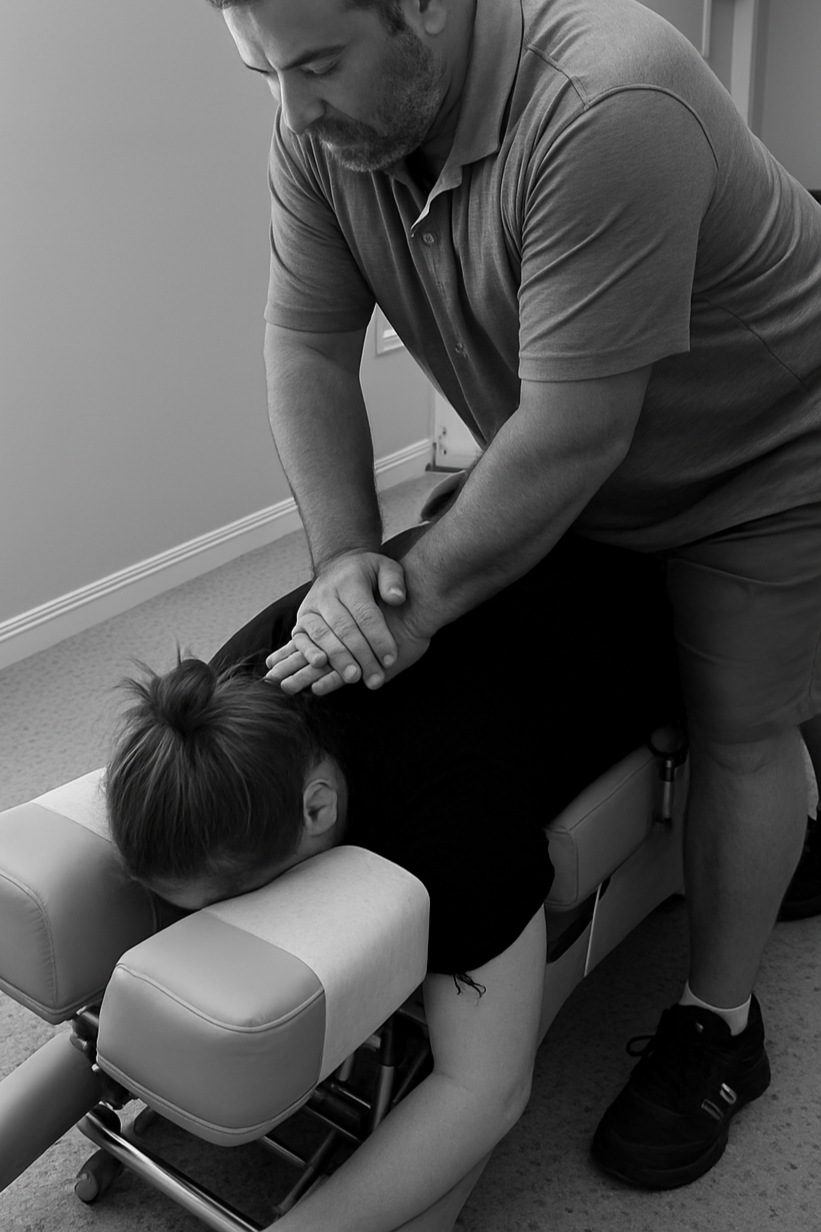
At Dr. Arthur Poisal Chiropractic, we don’t want to guess at the reason you hurt. We take time to listen to your concerns, ask about your daily routine, and assess how your body moves before creating a customized treatment plan.

Depending on your needs, your plan may include hands-on spinal adjustments, decompression therapy, shockwave therapy, or rehabilitative exercises. These options aren’t automatically right for everyone. We’ll explain what we find and discuss which approach may make sense for your goals.
Our aim is practical: help you move more comfortably and work toward lasting progress. That might mean returning to running, lifting weights, taking a walk, or simply getting through your day with less discomfort.
We care for patients of all ages, from children and active adults to aging adults who want to protect their mobility and independence.

When should you schedule an assessment?
Consider reaching out if your neck or back pain:
- Continues for more than a few weeks.
- Keeps returning despite changing your workstation.
- Interferes with sleep, work, exercise, or daily activities.
- Comes with frequent headaches or shoulder tension.
- Includes numbness, tingling, or weakness.
- Makes it difficult to walk, lift, or move normally.
Pain after a serious accident, sudden weakness, loss of bladder or bowel control, or numbness in the groin area requires prompt medical attention.
For less urgent symptoms, a conversation can be a simple first step. We’ll help you understand what may be contributing and whether our care is a good fit.
If you’d like to discuss neck and back pain relief Knoxville, call Dr. Arthur Poisal Chiropractic at (865) 687-5700. You can also fill out our contact form, and we’ll be happy to call you back. There’s no pressure, just a chance to tell us what’s going on and learn about your options.