Stiff Neck Treatment Knoxville TN: What Actually Helps

If your neck feels tight or hard to move, you may be wondering whether to stretch it, rest it, or get it checked. Stiff neck treatment Knoxville TN starts with understanding what could be contributing to the stiffness, not forcing your neck to move before it’s ready.
One thing we commonly see in our office is that the sore or stiff spot doesn’t always tell the whole story. The neck joints, nearby muscles, shoulder blades, and the way you’ve been using your upper body can all play a part.
Stiff Neck Treatment Knoxville TN: What May Be Going On?
A stiff neck often involves a mix of muscle tightness and sensitivity in the small joints that help your neck move. Those joints, called facet joints, may feel irritated after sustained positions or a sudden change in activity. Muscles in your neck and around your shoulder blades can tighten protectively, making movement feel restricted.
That doesn’t mean every stiff neck is a problem with the spine. Your symptoms may also reflect muscle fatigue, a change in your workload, or several small demands adding up.
Common contributors include:
- Long stretches at a desk or looking down at a phone.
- Driving in Knoxville traffic without changing position for a while.
- A different or uncomfortable sleeping position.
- Stress that leaves your shoulders and neck tense.
- A sudden increase in yard work, lifting, exercise, or other activity.

A lot of patients assume that one stretch or a new pillow should fix the problem. Those may help in some situations, but recurring stiffness can have more than one contributor.
Try Gentle Movement and Small Changes at Home
If your symptoms are mild, recent, and not accompanied by warning signs, start with comfortable, easy movement rather than complete rest. Slowly turn your head a little from side to side or nod within a range that feels manageable. You don’t need to reach the end of your range or push through pain.
You can also try:
- Heat or ice: Either may feel soothing. Use a cloth between the pack and your skin, keep the application comfortable, and stop if your skin becomes painful or irritated. Heat may feel good when muscles feel tense; some people prefer cold when an area feels newly irritated. There’s no need to keep using an option that doesn’t help.
- A brief setup change: Bring your screen closer to eye level, keep your phone higher when practical, and take short movement breaks during desk work.
- A change of position: On a long drive or during a workday, vary your position when you safely can. Avoid holding your neck in one posture for long stretches.
- Simple recovery habits: Make room for enough rest and notice whether stress or a sudden workload increase may be keeping your shoulders tense.
Avoid aggressive self-stretching, forcing your head through sharp pain, or trying to “crack” your own neck. Those actions can irritate the area further. If movement brings on pain that spreads, tingling, or weakness, stop and seek medical advice.
Why stretching alone may not be enough
Stretching may make a tight area feel temporarily looser, but it doesn’t necessarily change the reason the stiffness keeps returning. If the same long desk hours, driving, or sudden increase in activity continues, the muscles may keep tiring or guarding. Support muscles around the neck and shoulder blades may also need to rebuild tolerance gradually.
That’s why the goal isn’t simply to stretch harder. It’s to understand what loads your neck is handling and choose changes and exercises that fit your situation.
Know When to Get Your Neck Checked
A mild stiff neck may ease as you return to comfortable movement and adjust the things that seem to aggravate it. Consider getting an assessment if it lasts more than a week or two, keeps coming back, affects your daily activities, or isn’t improving with sensible self-care. Arm or hand symptoms, recurring headaches, or stiffness that’s consistently worse in the morning are also useful reasons to discuss what’s going on with a health professional.
Seek prompt medical care if you have a stiff neck with fever or a severe, unusual headache, numbness, tingling, or weakness in an arm or leg, or if symptoms began after a recent fall or other significant trauma. These signs need medical evaluation rather than home stretching or routine chiropractic care.
If symptoms are worse when you settle down in the evening, our guide to neck pain when lying down may help you think through how position and daytime activity can fit together.
What an Assessment-Led Visit Looks Like
At Dr. Arthur Poisal Chiropractic, we start by listening. We’ll ask when the stiffness began, what makes it better or worse, and how it fits with your work, sleep, driving, and activity. We’ll also ask about symptoms such as headaches or changes in your arm or hand.
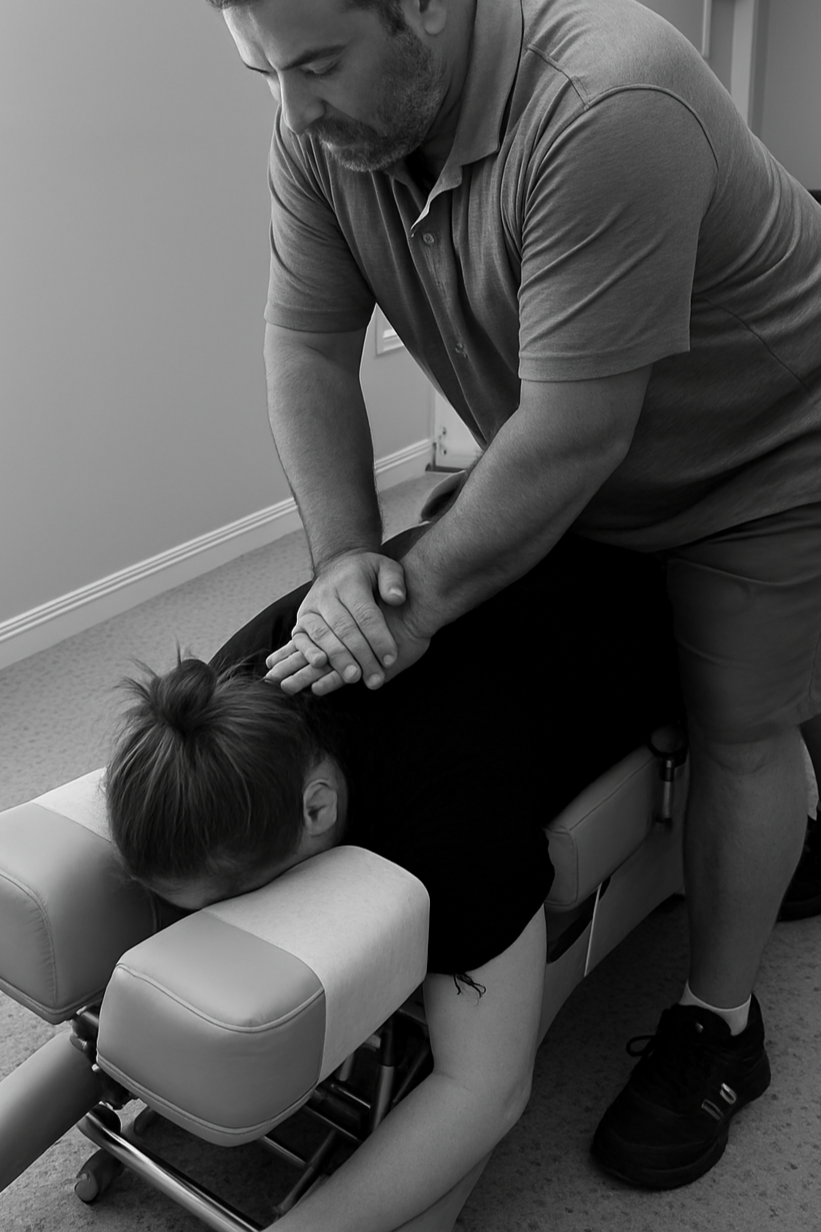
The examination may include comfortable checks of neck and shoulder movement, strength, and nerve function. We may look at how your upper back and shoulder blades move, too. The aim is to understand your pattern and decide whether chiropractic care is appropriate, not to assume that every stiff neck has the same cause.

If the findings support it, your plan may include manual therapy or an adjustment when appropriate, soft-tissue work, and a home program of gradual mobility and strengthening. We can also talk about building your tolerance for the work, exercise, driving, or daily tasks you want to return to. We’ll explain the options and tailor the plan to your needs and comfort.
You can learn more about our approach to neck and shoulder pain relief. If your stiffness is tied to long screen sessions, you may also find our article on how desk work can contribute to neck and back pain helpful.
Could shockwave therapy help?
Shockwave therapy may be considered for selected, stubborn soft-tissue problems, such as persistent muscle tightness or tendon irritation, after the acute phase settles. It isn’t needed for most simple stiff necks, isn’t appropriate for every cause, and should never replace a careful assessment. If it seems relevant, we’ll explain why and discuss whether it fits your situation. Learn more about shockwave therapy.
Let’s Find a Sensible Next Step
If your neck stiffness is lingering or getting in the way of your day, we’re happy to hear what you’ve been noticing and help you consider your options. Call (865) 687-5700 or visit us at 3371 Whittle Springs Road, Knoxville, TN 37917. You’re welcome to start with a conversation.
Written and clinically reviewed by Dr. Arthur Poisal, DC.
FAQs
How long should a stiff neck last?
It varies. Mild stiffness may settle with comfortable movement and adjustments to aggravating activities. If it lasts more than a week or two, keeps returning, or gets worse, consider an assessment.
When should I worry about a stiff neck?
Seek prompt medical care for stiffness with fever or a severe, unusual headache, numbness, tingling, or weakness in an arm or leg, or after a recent fall or significant injury.
Should I use heat or ice?
Either may feel soothing. Use a cloth barrier, keep it comfortable, and stop if your skin becomes irritated. Choose the option that feels better rather than forcing one approach.
Does a stiff neck need treatment, or will it go away?
Some mild, recent stiffness improves with gentle movement and time. If it persists, repeatedly returns, or limits your activities, an assessment can help clarify what may be contributing and whether care is appropriate.